


Research
Innovation and Discovery
Whether you're a student eager to join a vibrant community of scholars or a donor looking to support groundbreaking discoveries, your involvement will help shape the future. Explore how our research transforms ideas into action and fuels solutions for global challenges.
Advancing the Pride: Latest Research News

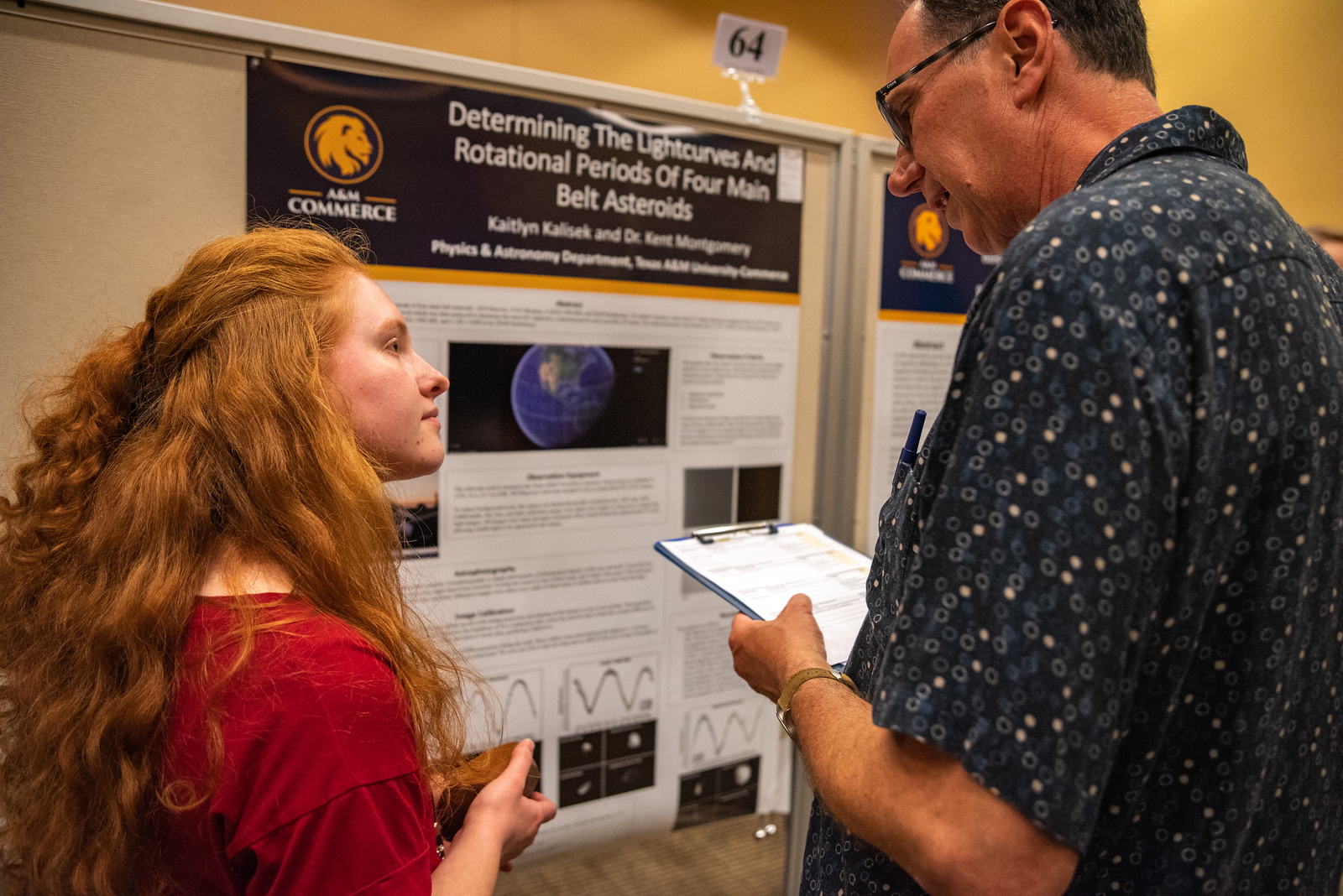
ETAMU-Led Fire Data Consortium Uses AI to Improve Firefighter Health and Safety
ETAMU researchers are building a secure, AI-powered data consortium to improve firefighter health, safety and career longevity.
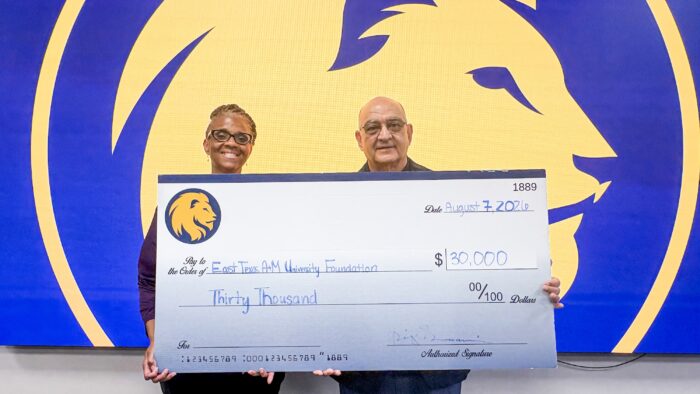
Alum Donates $30,000 to Support ETAMU Cancer Research and Science Education
East Texas A&M University recently accepted a generous $30,000 gift from a Lion alumnus to support cancer research by university professors and to fund strategic initiatives in the College of Science and Engineering (COSE).
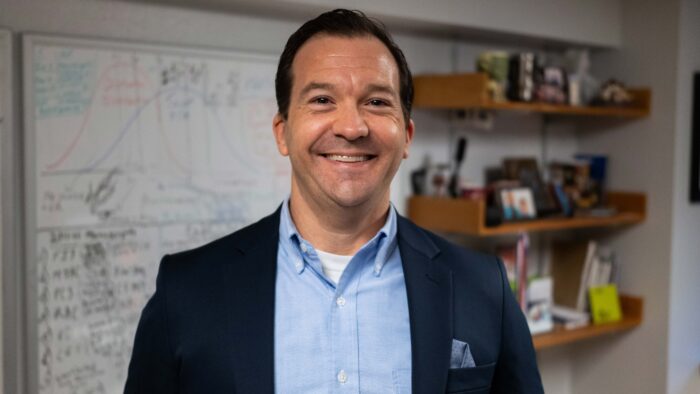
Can AI Make Police Lineups Fairer? ETAMU Researchers Aim to Find Out
The project combines eye-tracking technology and psychology to examine how people process real and AI-generated faces.
Browse Our Research
Biological Sciences
Super Quail Project
The Super Quail Project works to produce an affordable gamebird with wild-type survivability and a more stringent thermal tolerance so that they are prolific in challenging environments. We've made great progress in this arena and are building a Super Quail Production facility that will begin construction in 2024.
Human Dimensions Of Quail Sustainability
With declining populations of quail where there once was a thriving population, it is important to step back and consider how humans contribute to this change.
Quail Chick Development
Since 50-80% of quail adults die each year, and a quail’s lifespan is ~6 months, quail populations hinge on sustained quail chick production. Yet, that is the main cause of quail population decline in drought years. Accordingly, The Quail Research Laboratory is able to recreate field conditions in the lab to develop solutions for chick production in adverse conditions. We also develop the normal stages of development for various quail species and look at environmental pollutants and medicated feed on quail chick production and development. Learn More
Quail Research Station Program
Gamebird and quail populations are declining across the globe. Developing solutions for population sustainability is key to reversing these trends. The Quail Research Laboratory is unique in that our smallest research stations spans more than 500,000 acres. We image large-scale populations through innovative monitoring and provide results that explain observed mysteries of “where did all the quail go?” We have research stations in Montana, Kansas, California and Texas with comprehensive research into the impacts of climate, weather, management and other factors on a suite of upland gamebirds and waterfowl. Learn More
Unmanned Air Systems – Assisted Wildfire Fighting in Wildland Urban Interface Zones
A collaborative research effort between multiple universities is ongoing with a goal to improve the safety and effectiveness of firefighters in wildland-urban interface (WUI) zone fires. The reduction of the preventable fire burden occurs by decreasing the number of buildings that are ignited by exposure to wildland fire, detecting and suppressing spot fires, and helping to cool down the fire head and flanks. The system is based on the utilization of a swarm of Unmanned Air Systems (UASs) with on-board sensors to assist firefighters by reducing the need for firefighter deployment across dangerous terrain in unknown fire conditions. The specialized UASs are manufactured at East Texas A&M with payload capacities over 20 kg.
Freshwater Turtles' Spatial Use of Managed and Unmanaged Wetlands in Northeast Texas
Herpetological Communities within Constructed Wetland Complexes
Arming the Immune System to Fight Breast Cancer
Physics and Astronomy
The Behavior of Matter
We apply the modern theory of nuclei, based on quantum mechanics and computational methods, to various scientific questions and practical problems related to the origin of elements, the life and death of stars, and energy and medical applications in our research. Learn More
Physics Education
Physics education research focuses on understanding how to improve the teaching and learning of physics. Research seeks to identify and understand teaching strategies that build physics identity. Methods include analyzing both national survey data and case studies. We study the factors that affect students' career decisions with the goal of increasing the number of physics majors from underrepresented groups, including women, and improving the attitudes of all students regarding physics. You can find more information about our STEM teacher preparation programs here.
Organic Semiconductor Physics
Organic semiconductors are studied for their potential in next-generation optoelectronic devices. While they have many advantages over inorganic materials such as silicon, their material properties are still not well understood compared to inorganic materials. Research focuses on exciton and charge carrier dynamics in organic materials and organic/inorganic hybrid systems. Resolving the interfacial state’s problem and elucidating the characteristics of excitons and charge carriers represent critical steps to achieve efficient organic-based devices. Faculty: Dr. Heungman Park (webpage).
Surface Physics Studies
Surface Physics studies the structure and properties of the atoms on the surface of materials. The Surface Physics Laboratory at East Texas A&M engages in a variety of experimental research including X-Ray Photoelectron Spectroscopy (XPS), Soft X-Ray and Auger Electron Appearance Potential Spectroscopy (APS).
Astronomy and Astrophysics
Research is concerned primarily with observational and theoretical studies of asteroids, white dwarf stars and cataclysmic variable binary systems. Membership in the Southeastern Association for Research in Astronomy (SARA), provides access to three 1-m-class telescopes located at premier astronomical observatories in Arizona, USA, in Chile, South America, and on the island of La Palma in the Canary Islands. We also operate the 0.6-m East Texas A&M Observatory.
Nuclear Theory and Nuclear Astrophysics
Modeling and calculating observables in direct reactions, heavy-ion central collisions, fusion reactions, formation and decay of compound nuclei, nuclear structure, mean-field theories, radiative capture reactions, transport theories, neutrino scattering, white dwarfs, neutron stars, supernovae and applications of computer science. Research encompasses many branches of nuclear science such as stellar evolution, stockpile stewardship and national security.
Literature and Languages
Digital Humanities and Artificial Intelligence
Digital Humanities (DH) brings traditional humanities research into conversation with digital tools, texts and technologies, from computational literary analysis to the creation and study of born-digital projects. As digital technologies continue to reshape human culture and communication, Artificial Intelligence (AI) has emerged as a growing area of DH research, with our faculty exploring how these technologies can expand humanities scholarship while addressing their broader cultural and ethical implications. Read more about Digital Humanities and Artificial Intelligence.
Innovating Pedagogy
Professors are constantly exploring new teaching methods in order to help their students learn more and better. Many of our faculty go one step further, researching teaching and learning practices themselves to help other educators develop more innovative pedagogy. Below is a sample of our work in digital learning and resources, second language learning and teaching, and the interaction between identity and education. Read more about Innovating Pedagogy.
Reading Culture in Literature and Media
While there are a variety of approaches to literary and media analysis, our faculty tend to research how literature/media shape and reflect culture. How do literature and media shape children's (and adults') perception of their world? How can individual people–authors, filmmakers, readers, editors–impact not just the publishing industry but also their culture through what they write and think? How is personal identity written into literature and media and how does that impact readers? These are the kinds of questions that spur many of our faculty members' research. Read more about Reading Culture in Literature and Media.
Writing from the Borderlands
Gloria Anzaldúa–a well-known Texas scholar and author–theorized what it means to exist in the borderlands, the area that spans borders and brings cultures into contact. Such spaces invite a blurring of identities and ideas that can produce exciting new literature and media. Like Anzaldúa, many of our faculty members research how stories–from classic literature to K-Pop and Disney movies–exist between and across borders. This research explores how people negotiate their own national and personal identities by exchanging and reshaping stories in these amorphous areas where cultures collide. Read more about Writing from the Borderlands.
Humor Studies
What makes something funny? It is shockingly difficult to explain humor without losing the humor of the thing, and yet that's exactly what these faculty members do in their research. Not only are our faculty members widely published in humor studies, but they also host the annual North East Texas Humor Research Conference, where you can see humor research in action. Read more about Humor Studies.
Disability and Accessibility
Disability is one of the few identity markers that can shift across a person's lifetime. Everything from congenital disorders to chronic illnesses to injuries to old age can change anyone's ability to engage with the world at any moment in time. The very ubiquity of disability is why studying disability is so vital; since anyone/everyone can experience disability (if even briefly), disability is central to the human experience. Our faculty members research how disability is represented and discussed and how to make the world more accessible for people with disabilities. Read more about Disability and Accessibility.
Augmentative and Alternative Communication
This project aims to assist people who have speech difficulties or impairments due to developmental or acquired disorders. These people often rely on Augmentative and Alternative Communication (AAC) devices, which allow them to select letters, images, words or sentences that are then spoken aloud. Read More about AAC
TESOL and Language Teacher Training in the Digital Age
Our research team aims to advance innovative technology-assisted practices in the language teacher education classes as well as train pre/in-service teachers to embrace online learning materials. Read More About TESOL and Language Research
Pragmatics and Second Language Acquisition
Pursue research projects to understand the pragmatic performance and perceptions of language learners from different backgrounds. Read More Pragmatics and Second Language Acquisition
Multimodality and Communication
Our research spans from studying humor in communication to improving digital literacy and effective online instruction using innovative web tools. This approach is essential for a deeper understanding of how we communicate digitally. Read More About Multimodality and Communication
Artificial Intelligence and Natural Language Processing
Dr. Hempelmann has led the research departments of two search engines and most recently pioneered a project on humor and AI under Amazon’s prestigious Grand Challenge breeder for cutting-edge research. Read More about AI and NLP Research
Second Language Writing and Technology
The research team in the Applied Linguistics lab endeavor to understand the nature of writing that takes place in the digital environment and to explore the impact of new technologies on writing processes, products, and language writing development. Read More About This Research
Humor and Multimodal Markers Project
The project is based on a corpus of digital-quality audio-video recordings of dyadic conversations in which speakers perform a baseline joke and then are free to talk for about ten minutes. Both speakers are closely miked and have a computer camera trained on them, thus allowing for multimodal features including prosody and eye gaze to be captured. Read More About Humor and Multimodal Markers