



Can AI Make Police Lineups Fairer? ETAMU Researchers Aim to Find Out
The project combines eye-tracking technology and psychology to examine how people process real and AI-generated faces.
A police lineup is supposed to test an eyewitness's memory, not point them toward a particular suspect. But as artificial intelligence makes it possible to generate realistic human faces in seconds, researchers at East Texas A&M University are asking whether the technology could help law enforcement build fairer lineups—or inadvertently make them less reliable.
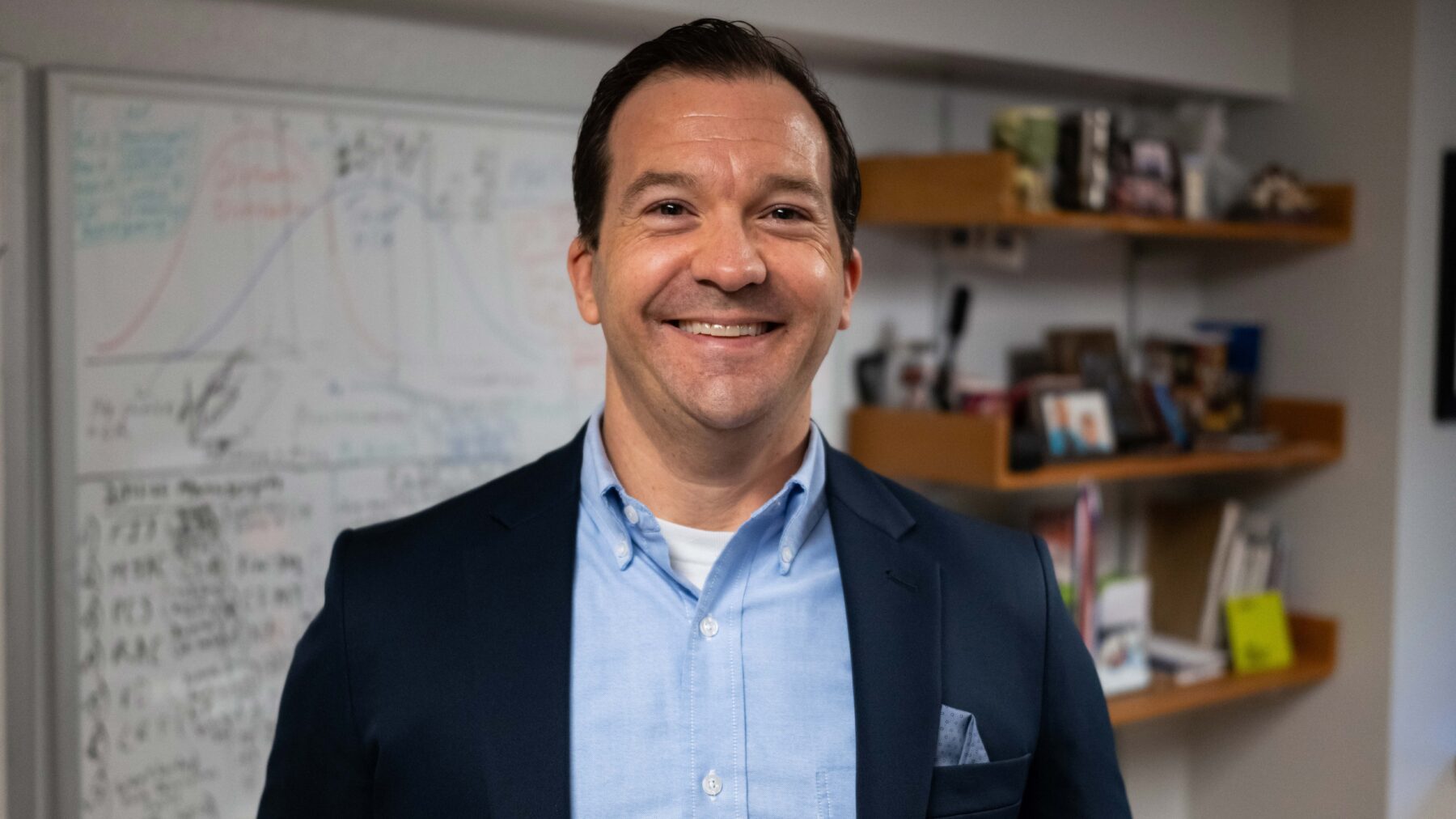
Dr. Curt Carlson, professor of experimental psychology at East Texas A&M, is leading a research project examining how eyewitnesses respond to real and AI-generated faces. Backed by a $100,000 Research Excellence Fund (REF) grant from The Texas A&M University System, the work combines eyewitness identification research, face perception theory and eye-tracking technology.
The stakes extend well beyond the laboratory. Eyewitness misidentification remains a significant contributor to false convictions, making the way police construct and administer lineups an important area of psychological research. Carlson's team ultimately hopes to provide law enforcement with practical recommendations for using—or avoiding—AI-generated faces in identification procedures.
Building a Fairer Lineup
When police identify a suspect, Carlson said, simply presenting that person to an eyewitness and asking whether they committed the crime is generally not the preferred approach. Instead, researchers recommend creating a lineup that includes the suspect alongside known-innocent individuals called fillers.
The challenge is ensuring the suspect doesn't stick out like a sore thumb.
“How do you make a good lineup, a fair lineup where the suspect doesn't stand out?” Carlson said. “What we're doing is focusing on that issue of how police should select what are called fillers.”
Traditionally, police can search digital collections of mug shots for people matching an eyewitness's description of the perpetrator. Now, AI could dramatically simplify that process. Investigators can potentially provide a description—or even a photograph of the suspect—and quickly generate several digital faces with similar characteristics.
“I think the benefit is that it's a flexible technology that police could potentially use very quickly,” Carlson said.
But convenience does not necessarily mean fairness.
If five fillers are generated by AI while the suspect's booking photograph depicts a real person, witnesses could process those images differently. Even highly realistic artificial faces might contain subtle characteristics that make the real person stand out.
“Having a real suspect's photo in there with AI fillers could be problematic,” Carlson said. “Someone's got to do the research to see, wait a second, are you putting the suspect in a problematic situation there because he's in there with five AI-generated fillers?”
There is another possibility: AI might create fillers that resemble a guilty suspect too closely, potentially making a correct identification more difficult. The researchers hope to determine where that balance lies, protecting innocent suspects without reducing witnesses' ability to identify perpetrators.
Looking Through the Eyes of a Witness
Finding out which face someone selects is only part of Carlson's research. His team also wants to understand how witnesses reach that decision.
The project includes collaboration with Dr. Dawn Weatherford at Texas A&M University-San Antonio, where researchers will use Tobii eye-tracking glasses to record where participants look while examining faces. The technology can measure which faces attract attention, how long participants examine them, how often their gaze moves between images, and whether real and AI-generated faces produce different viewing patterns.
“We're going beyond the usual data that we get, which is behavioral data like keyboard presses,” Carlson said. “Eye tracking can help researchers begin raising the curtain on the underlying cognitive processes driving their decision-making process.”
Researchers will also examine whether witnesses focus on internal facial features, such as the eyes and nose, or external characteristics, such as hair. Carlson said decades of face-perception research suggest people viewing an unfamiliar face often remember external features—even though characteristics such as clothing and hairstyles can easily change.
Accompanying the eye-tracking experiments, the team will conduct large-scale online studies involving thousands of participants. Together, these approaches will allow researchers to compare behavioral outcomes across a large sample with detailed information about how participants visually process lineup faces.
Alongside Carlson and Weatherford in this research are Dr. Alyssa Jones, from Tarleton State University, who will be contributing through experimental design, data analysis and writing, and ETAMU’s Dr. Maria Carlson, who will also be conducting data analysis.
Research With Real-World Impact
Students will be deeply involved in the work. Carlson said his seven doctoral students will play various roles in the project, while the grant also provides support for undergraduate research assistants working in Weatherford's eye-tracking lab.
That opportunity reflects the broader research environment within ETAMU's Department of Psychology and Special Education. The department offers programs ranging from undergraduate psychology to master's and doctoral study, including the Experimental Psychology Ph.D. program coordinated by Carlson.
For students interested in cognitive psychology, eyewitness memory or the intersection of emerging technology and human behavior, Carlson's project demonstrates how laboratory research can address questions with direct consequences for the criminal justice system.
The $100,000 project is also intended to generate preliminary data for a much larger effort. Carlson and his collaborators plan to use their findings to strengthen a National Science Foundation proposal for approximately $1.3 million to expand the research over three years.
For Carlson, however, the ultimate measure of success is not simply another grant. It is whether the findings can help police construct identification procedures that give investigators useful evidence while protecting innocent people.
“If AI fillers work, then we can give them the green light,” Carlson said during the interview. “If they don't, then we need to make those limitations known.”
Dr. Weatherford touched on the significance of this project: “Our research tackles this critically important real-world circumstance to reveal ways to maximize potential benefits without introducing problems that lead to miscarriages of justice.”
The question is increasingly relevant as AI tools become easier to access. Before digital faces become another tool in the investigative toolbox, Carlson and his team want evidence showing whether they make eyewitness identification better—or introduce an entirely new source of bias.