



From Soil to Discovery: East Texas A&M Students Identify Two New Bacterial Viruses
A two-semester research experience gives undergraduates the chance to expand scientific knowledge and become authors of an accepted journal article.
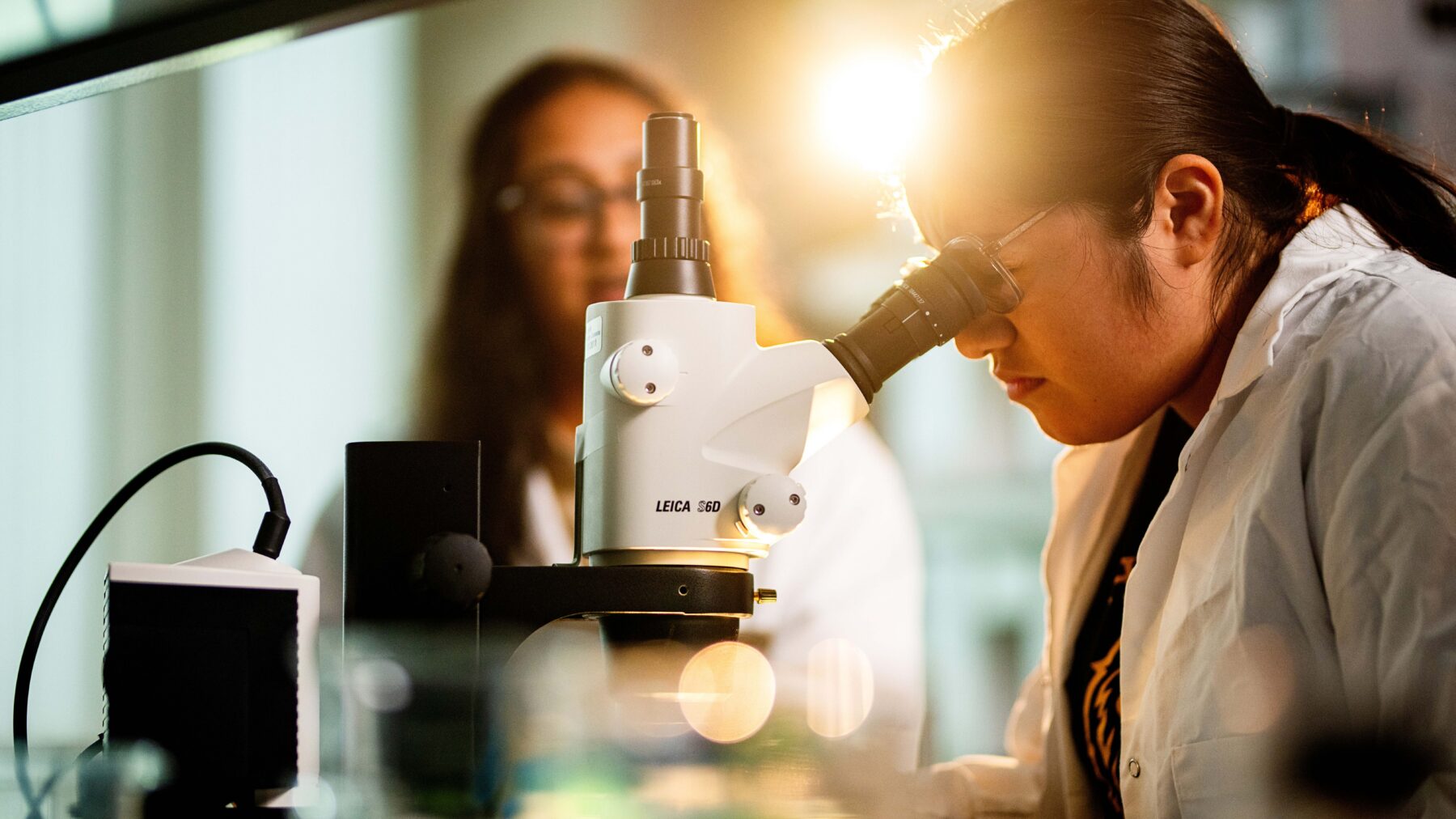
A soil sample collected near a campus lake. Another gathered from a stormwater basin in Caddo Mills. Hidden in both were viruses that had never been identified—until East Texas A&M University students went looking.
Through a research experience spanning two semesters, undergraduate students isolated two previously unidentified viruses called bacteriophages. The work has been accepted for publication in microPublication Biology, with a publication date pending.
For students considering a science major, the project illustrates how a university course can become an opportunity to make an original discovery.
“The whole process brings out this brand new information to the scientific community,” said Dr. Hyun-Joo Nam, an assistant professor in the Department of Biological and Environmental Sciences.
Discoveries Hidden in Local Soil
Bacteriophages, also called phages, are viruses that infect bacteria—not people. In this project, students searched for viruses capable of infecting a specific strain of the bacterium Arthrobacter globiformis.
The research began in fall 2025, when students brought soil samples from places near campus and their homes. With guidance from Dr. Archana Srinivas, an assistant professor, and graduate teaching assistant Shabnam Fathima, they worked to separate the viruses from the soil.
Students combined material from the samples with the host bacteria and looked for evidence of infection. When phages infect and kill bacteria growing on a laboratory plate, they leave small clear areas called plaques. Those clearings helped students detect viruses too small to see with an ordinary light microscope.
Success did not come immediately. Weeks of unsuccessful attempts required patience and troubleshooting before the students isolated the two phages.
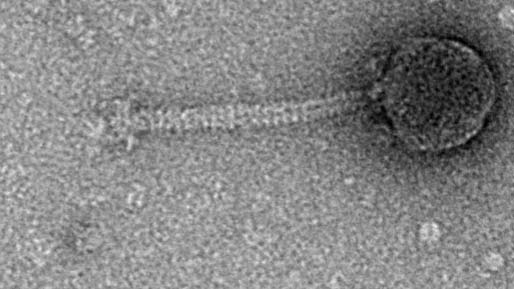
The bacteriophage LastNadiia, named by research student Kateryna Voroshylo, came from soil near Charles S. Garvin Lake on the East Texas A&M campus. Its name reflects both persistence and a family connection: Nadiia means hope and is the name of Kateryna's grandmother. “Last” refers to a final effort to isolate a phage from the sample.
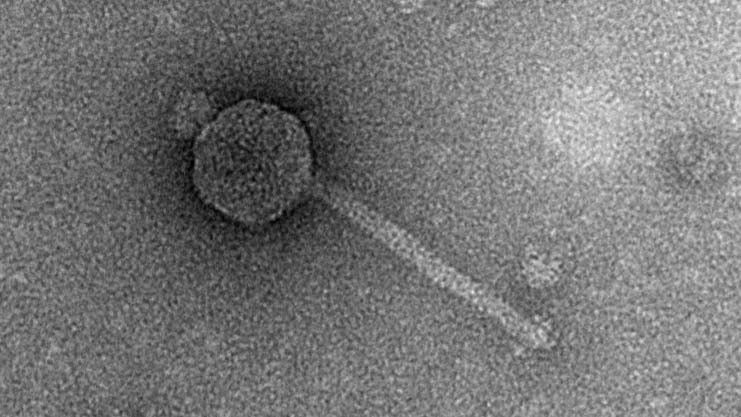
Mireles, the bacteriophage recovered from soil in a Caddo Mills stormwater basin, was named by researcher and recent graduate Neyda Figuero, and the phage takes its name from the Neyda's mother's maiden name.
Finding the viruses was the beginning. Students also studied the clearings they produced and examined patterns in their DNA to learn more about them. Samples sent for electron microscopy revealed that both viruses have a head containing genetic material and a long, flexible tail.
Reading the Viruses' Genetic Instructions
The next stage moved from laboratory plates to computer screens.
After collaborators at the University of Pittsburgh sequenced and assembled the viruses' DNA, students worked with Nam to analyze their genomes—the complete sets of genetic instructions carried by the viruses.
Using specialized computer programs, students searched for genes, evaluated where those genes began and compared them with genes in other phages. This process, called genome annotation, helps researchers predict what a virus's genes might do.
Both phages belong to cluster FR, a group of genetically related bacteriophages whose first members were reported in 2024. Studying additional members helps scientists understand the group's shared features and differences.
Discovering and documenting phages expands the information available to researchers studying viral diversity, evolution and how viruses interact with bacteria. Each characterized genome gives scientists another point of comparison and another resource for asking new questions.
Nam and Srinivas also explained that interest in bacteriophages extends to the broader challenge of antibiotic resistance. Because phages infect bacteria, scientists are exploring whether selected viruses could help combat infections that resist antibiotics.
The East Texas A&M study focused on discovery and characterization. It did not test LastNadiia or Mireles as medical treatments, but it contributes to the growing body of knowledge about bacterial viruses.
Becoming Scientists Through Experience
The project is part of Science Education Alliance–Phage Hunters Advancing Genomics and Evolutionary Science, or SEA-PHAGES—part of BSC 424 Bacteriophage Discovery and BSC 493 Bioinformatics of Phages at ETAMU—supported by the Howard Hughes Medical Institute.
The experience combines laboratory discovery in the fall with genetic analysis in the spring. It follows a course-based undergraduate research experience, or CURE, model, allowing students to conduct original research as part of their coursework.
For Fathima, who assisted with both courses, the work meant preparing laboratory materials, troubleshooting problems and helping students learn unfamiliar software. She said the experience was valuable because participants could follow a research project through its successive stages.
“You start with novel phages, you actually characterize them, and get a publication out of it,” Fathima said. “It was a great experience.”
Fathima plans to pursue a doctorate and continue studying bacteriophages.
Srinivas emphasized that students do not need previous research experience to participate, although they must meet course prerequisites. Faculty and teaching assistants guide them through the process, helping them understand how a project develops and how to respond when an experiment does not work as expected.
“You see scientists in the making as they proceed through both courses,” Srinivas said.
The Department of Biological and Environmental Sciences offers undergraduate and graduate research opportunities across fields ranging from microbiology and molecular biology to ecology. Its biological sciences bachelor's programs prepare students for careers in research and health-related fields, while its environmental science bachelor's program combines coursework, collaborative research and field experience.
For prospective science majors, LastNadiia and Mireles demonstrate what those opportunities can produce: a discovery drawn from local soil, new information shared with other scientists and the experience of carrying a research question from the first sample to a scientific manuscript.