


Profile for
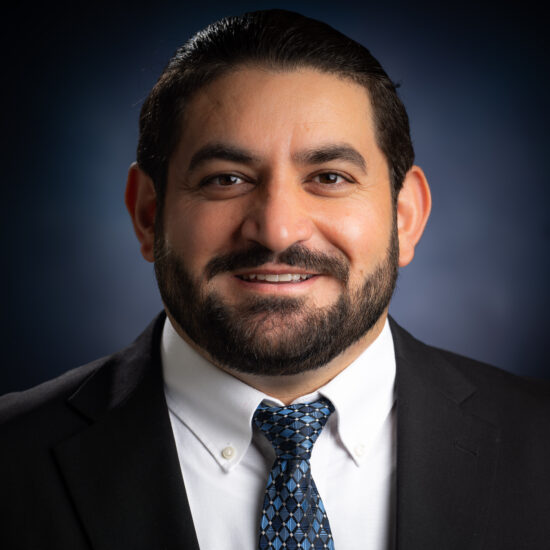
Mustafa Mashal, Ph.D., CPEng, IntPE(NZ)
Vice President for Research and Economic Development (VPRED); Professor, College of Science and Engineering
- Faculty
- Staff
Division of Research and Economic Development
I am Dr. Mustafa Mashal, Vice President for Research and Economic Development and a professor in the College of Science and Engineering at East Texas A&M University. I also hold a joint appointment with Idaho National Laboratory, where I work at the intersection of academic research, national laboratory capabilities and industry partnerships. I am an engineer, researcher and educator who has spent my career building research programs, developing partnerships and mentoring students. I have been very fortunate to have mentors who opened doors for me, and I now see it as my responsibility to create opportunities for others. I am excited to work with the entire ETAMU community and help faculty and students across all disciplines turn their ideas, creativity and scholarship into meaningful impact.
How do you help students at East Texas A&M?
I want to help create opportunities for students across every discipline to explore their interests, participate in research and connect their education to real world opportunities. As VPRED, I work with faculty and university leaders to strengthen research, partnerships, innovation and resources that ultimately benefit our students. I also want students to know that research and discovery are not limited to one field. Every discipline has important questions to ask and meaningful contributions to make.
A Conversation with Dr. Mashal
Tell us a little about yourself (educational background, research interests, etc.)
I grew up in Kabul, Afghanistan, and became interested in engineering because I saw how important safe and resilient infrastructure is to communities. My research began with structural and earthquake engineering, concrete and precast structures, bridges and resilience, and has expanded into areas including advanced materials, advanced manufacturing, environmental security, critical infrastructure and development and deployment of advanced nuclear reactor systems. I am particularly interested in multidisciplinary research because the most important challenges facing society rarely fit within a single discipline. My goal has always been to bring different perspectives together and move ideas from research and discovery toward solutions that can have a meaningful impact in the real world.
What would you tell a student who is thinking about attending East Texas A&M?
I would tell students to choose a university where people know them, support them and challenge them to grow. My own journey from Kabul University in Afghanistan to graduate school in the United States and New Zealand was shaped by mentors who opened doors and encouraged me to pursue opportunities I never imagined. East Texas A&M offers students the opportunity to build meaningful relationships with faculty, explore their interests and become part of a growing university. Take advantage of every opportunity, ask questions and do not be afraid to dream bigger than you think you can.
What do you like most about your career?
What I enjoy most is seeing people grow and seeing ideas become meaningful contributions to society. Throughout my career, I have had the privilege of working with students, faculty, industry and community partners to address important challenges. Whether the work involves science, engineering, health, education, the arts, business or the humanities, I enjoy seeing people bring their knowledge and creativity together to make a difference. Helping people discover what they are capable of is one of the most rewarding parts of my career.
How has your role changed since you began working at East Texas A&M?
My role has expanded from leading individual research programs to helping shape the university’s broader research and economic development enterprise. I now have the opportunity to work with faculty and students across the university, support research and creative activity in many disciplines, develop partnerships and help position ETAMU for greater impact. At the same time, I remain a professor and a researcher because staying connected to students and scholarship is important to me. I see this role as an opportunity to help build a stronger and more connected university.
Educational Background
- Ph.D. in Civil Engineering (Structural and Earthquake Engineering), University of Canterbury, New Zealand, 2015
- M.S. in Civil Engineering (Structural and Earthquake Engineering), State University of New York at Buffalo, 2011
- B.S. in Civil Engineering, Kabul University, Afghanistan, 2009
Awards and Honors
- 2026 – Fellow, American Society of Civil Engineers (ASCE)
- 2026 – The Honor Society of Phi Kappa Phi – Inductee
- 2025 – Distinguished Researcher (Idaho State University)
- 2023 – Accomplished Under 40 (Idaho Business Review)
- 2023 – Fellow, Structural Engineering Institute (ASCE)
- 2022 – Fulbright U.S. Scholar (Qatar)
- 2022 – University of Canterbury Visiting Erskine Fellowship (New Zealand)
- 2020 – Alfred Noble Prize (ASCE)
Select Publications
Professional Organizations
- American Society of Civil Engineers (ASCE)
- Structural Engineering Institute (SEI)
- American Nuclear Society (ANS)
- Transportation Research Board (TRB)
- Bridge Engineering Technical Society (New Zealand)
- Precast/Prestressed Concrete Institute (PCI)
- Honor Society of Phi Kappa Phi
- State Alumni (United States Department of State)
Related News
Psychology Professor Secures $581K in Research Excellence Fund Grants
Three Research Excellence Fund grants are expanding psychology research, student opportunities and technology at East Texas A&M.
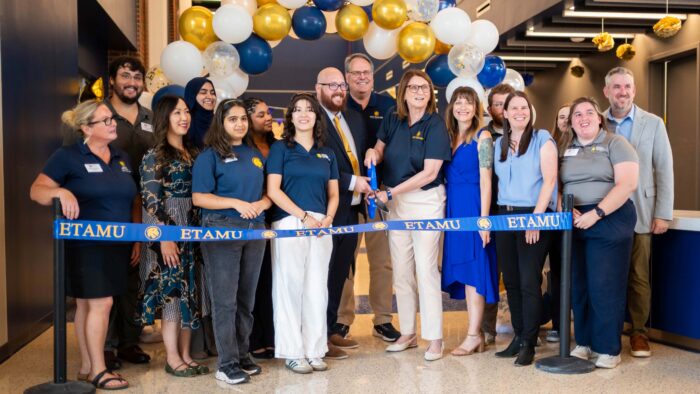
ETAMU Celebrates Grand Opening of Expanded Morris Recreation Center
Faculty, staff and community members came together to be a part of the ribbon cutting, facility tours and fun, as the Rec Center doors opened with a new shine.
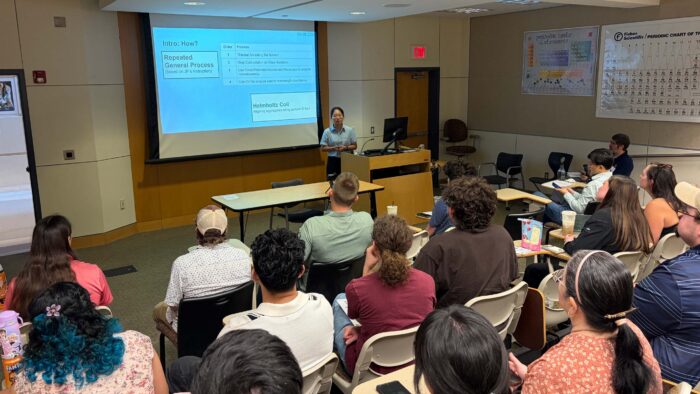
Student Researchers Showcase Summer Discoveries at East Texas A&M REU Symposium
East Texas A&M students and community college participants showcased original chemistry, physics and astronomy research during the university’s annual REU Symposium.