


Neutron Stars
Dr. William Newton
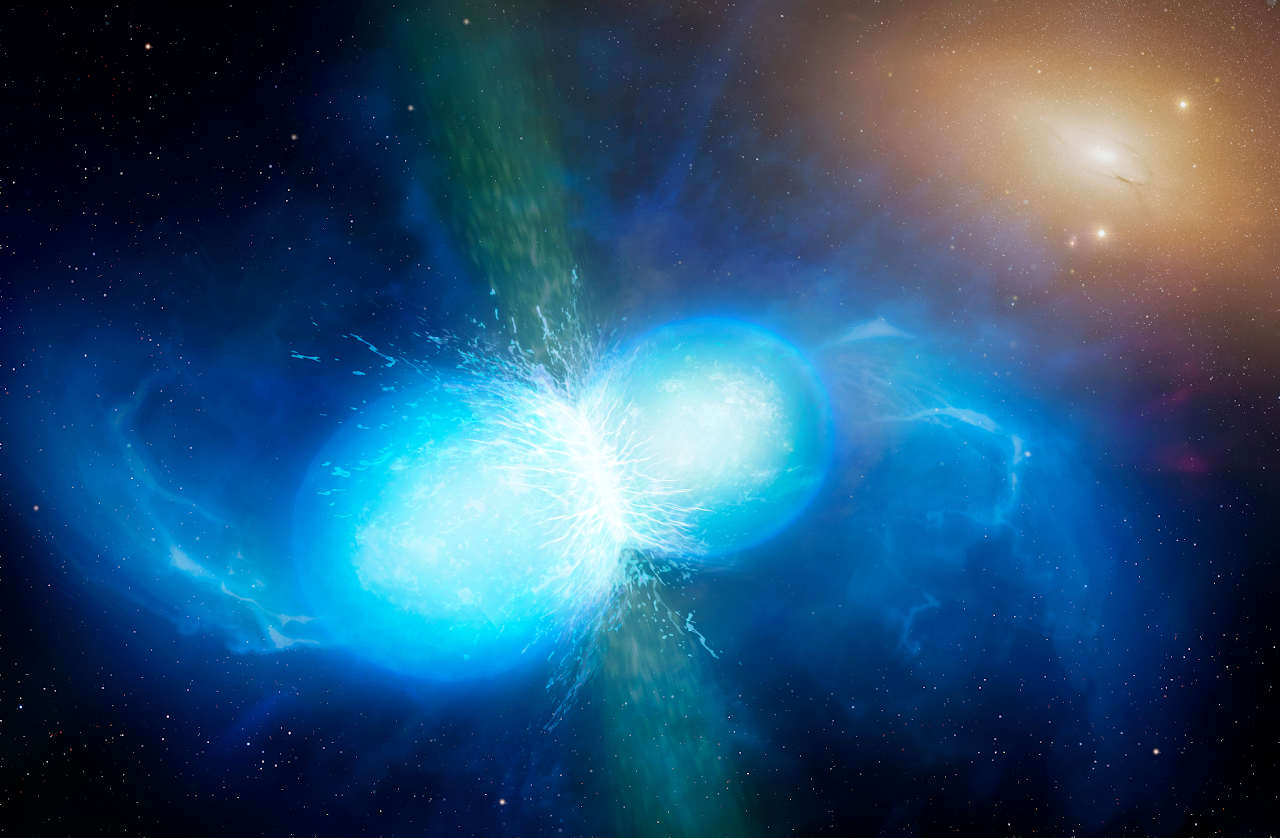
Dr. William Newton’s researches the nuclear physics of neutron stars, the densest known objects in the universe, with gravitational fields only exceeded by black holes.
Dr. William Newton’s research focuses on using observations of neutron stars to constrain the exotic properties of super-dense matter and the interaction between neutrons and protons (still relatively poorly known). He is also interested in using nuclear experiments to constrain the behavior of neutron stars in a variety of astrophysical scenarios, including magnetars (neutron stars with colossal magnetic fields) and X-ray binaries (neutron stars accreting material off of an ordinary companion star).
Student Projects
There is growing observational evidence that one of the most famous neutron stars, the Crab pulsar that lies at the heart of the beautiful Crab nebula, was formed in a relatively unusual type of supernova, that results from the collapse of a star with a core made of Oxygen, Neon and Magnesium. Such a supernova results in a neutron star with a specific mass, between 1.2 and 1.3 times the mass of our Sun. Given that mass, we can predict other observational properties of the Crab pulsar, including how fast it is cooling and how it’s spin period is changing. The project will be to obtain predictions for these properties and compare with the observed properties of the Crab pulsar.
What You Will Do
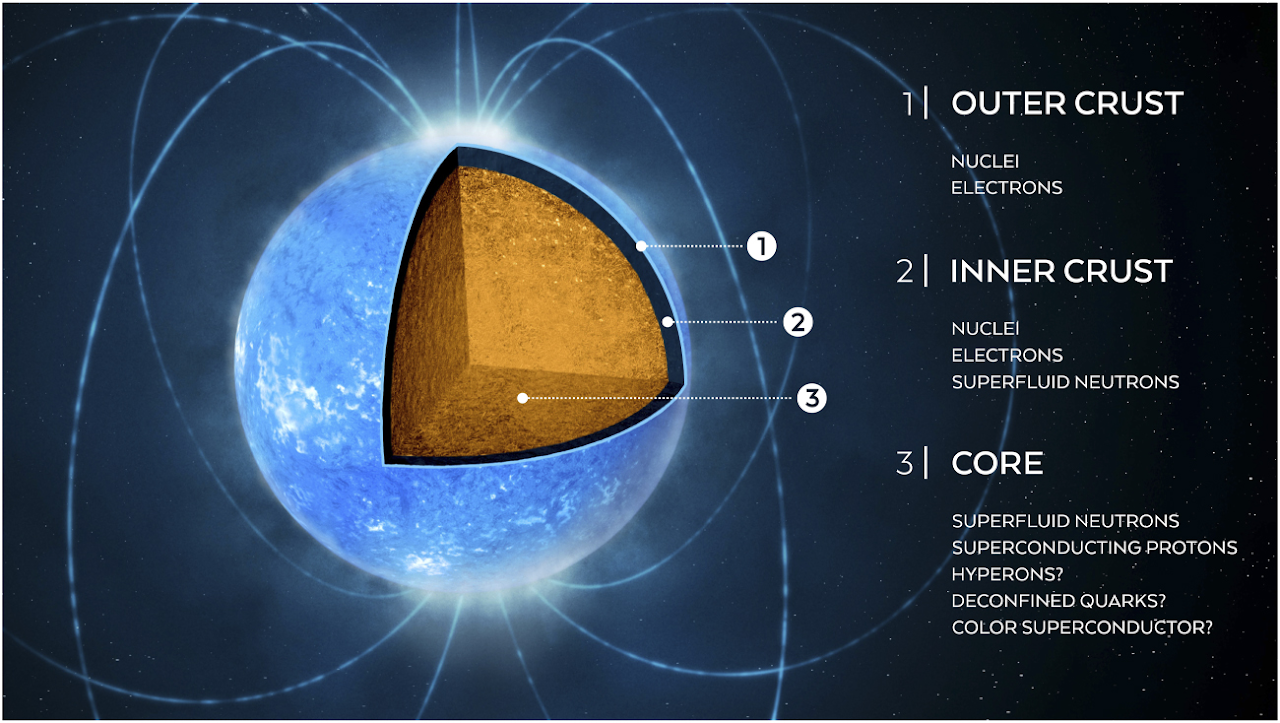
During the first week the students will familiarize themselves with the context: the different stellar evolution scenarios that lead to the production of a neutron star, the properties of neutron stars and the variety of physics we can learn from them. The student will use a number of different codes written in FORTRAN to compute the cooling rate and spin evolution of the crab pulsar. These results will be analyzed and plotted using Python codes developed by the REU student. The student will explore the literature on the Crab pulsar to obtain the latest measured properties and compare them with the outcome of our simulations. The student will assess whether these calculations are consistent with the currently favored stellar evolution scenario.
The student will also explore the literature to identify other properties of the Crab pulsar that can be estimated within the available time, and begin to develop codes to calculate them. In the final 2 weeks, the student will spend 50% of the time to prepare a final report of the research.