



Robert E. Howard Scholars Gather as East Texas A&M Takes Helm of The Dark Man Journal
Scholars, students, writers and fans gathered online to celebrate the university’s new role as home of The Dark Man: Journal of Robert E. Howard and Pulp Studies.
East Texas A&M University helped launch a new chapter in the study of the works of author Robert E. Howard on June 20 as more than 100 people attended “Afterlives of World Building: The Legacy of Robert E. Howard,” an online conference celebrating the university's new role as home of The Dark Man: Journal of Robert E. Howard and Pulp Studies.
Howard was a Texas author best known as the creator of the character “Conan” and a pioneering figure in modern sword-and-sorcery fiction. Though his life was brief—he died in 1936 at age 30—his influence continues to shape fantasy, horror, comics, gaming and popular culture nearly a century later.
The conference marked the beginning of a new era for The Dark Man, now hosted through The LAIR, East Texas A&M's institutional repository. The journal's editorial team includes Dr. Tracy Henley, Regents Professor and professor of psychology at ETAMU; Dr. Hunter Hayes, professor of literature at ETAMU; and Dr. Benjamin Garstad, professor of classics at MacEwan University.
Henley said the previous editors wanted to pass the journal to new leadership, and “there was a conscious decision to look for a Texas home.” East Texas A&M proved to be a natural fit, he said, because Henley, Hayes and Garstad have a forthcoming book on Howard, and Waters Library has the infrastructure to support the journal. According to Garstad, Sarah Northam, director of research and instruction services at Waters Library, was instrumental in bringing The Dark Man to the university, helping the editors navigate the transition and creating the meeting and registration system that made the conference possible.
“We have big plans,” Henley said, “including adding a student section, reaching out to well-known scholars and expanding the journal's reach.”
A New Chapter for Howard Studies
The conference served as the public launch of The Dark Man’s new era under its editorial team of Henley, Hayes and Garstad, and it featured two panel discussions, two pre-recorded YouTube interviews and a keynote conversation with Sara Frazetta, granddaughter of legendary fantasy artist Frank Frazetta and co-founder of Frazetta Girls, which is dedicated to preserving the legacy of Frank Frazetta. The event was lively from the start, with audience questions, active discussion and conversations that continued even during the intermissions between panels and the keynote.
The first panel featured an accomplished group of Howard scholars and authors, including Laura Shubert, author of “The Shadow King of Fantasy: Robert E. Howard”; Brian Murphy, author of “Flame and Crimson: A History of Sword-and-Sorcery”; popular culture scholar Jonas Prida; noted weird fiction researcher S.T. Joshi; and Jeffrey Shanks, an archaeologist, popular culture historian and advisor for Heroic Signatures.
Panelists discussed Howard’s relevance, why his name may not be as widely recognized as writers such as J.R.R. Tolkien or H.P. Lovecraft, and how Conan sometimes “outshadowed” his creator. They also explored Howard’s work across multiple genres, including fantasy, horror, westerns and adventure fiction.
A second panel featured Charles Gramlich, a longtime psychology professor, literary scholar and fiction writer; Jim Zub, an award-winning comic book writer whose credits include “The Avengers”, “Dungeons & Dragons” and the current “Conan the Barbarian” series; and Jeffrey Shanks.
The discussion moved between scholarship and pop culture, touching on Howard’s poetic prose, vivid scenery, favorite Howard stories, Conan’s transition into comics and other media, Howard’s world-building and common misconceptions about his career.
The keynote with Sara Frazetta gave attendees a personal look at another major part of Howard's pop-culture legacy. Frazetta discussed growing up surrounded by her grandfather's art, the connection between Frank Frazetta's paintings and Conan, and why the character continues to transcend generations. She also answered questions from attendees for about an hour.
Beyond the Panels
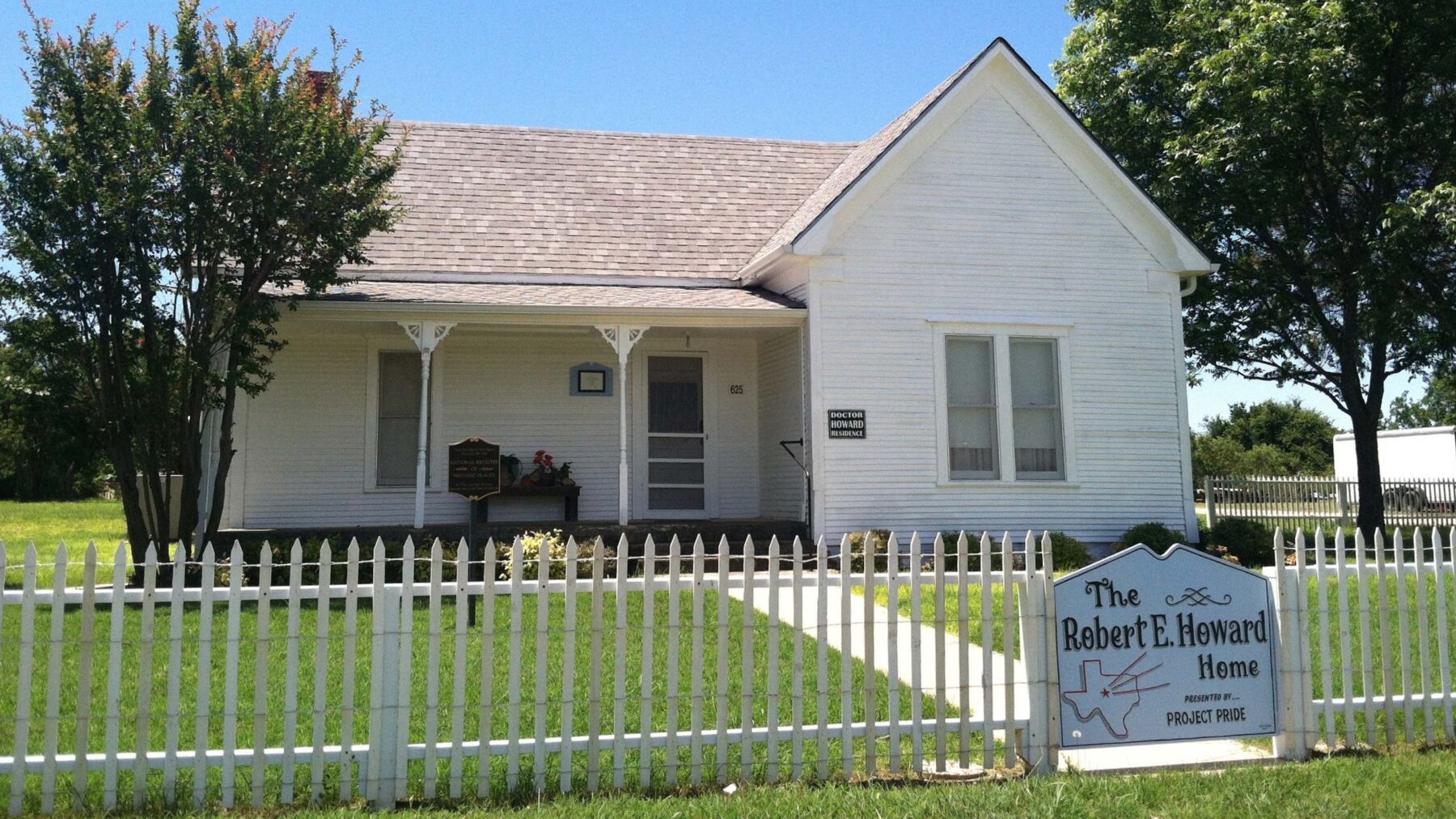
The conference also included two pre-recorded interviews. In one, Arlene Stephenson, president of Cross Plains Project Pride, and Jacque Childress, the organization's vice president, discussed the Robert E. Howard House Museum and the worldwide community that continues to visit Cross Plains, Texas, to connect with Howard's life and work.
They described visitors traveling from around the world, museum materials translated into nine languages, and the emotional experience many visitors have when seeing the desk where Howard wrote. Their comments reinforced the importance of place in Howard studies and the significance of bringing The Dark Man to a Texas university.
The second interview featured Rusty Burke, a longtime Howard scholar and editor who helped found The Dark Man and played a key role in promoting the serious study of Howard's work. Burke encouraged younger readers and scholars to explore beyond Conan.
“Read him. Read all kinds of stories,” Burke said. “Don't just read Conan.”
He also said Howard is “way overdue for some academic attention,” a sentiment reflected throughout the conference and in the journal's new direction.
Building the Future
Student involvement was another major part of the event. Garstad said his students helped plan and manage the online conference in addition to serving as panel moderators.
“All the participants had something interesting to say and I learned a lot,” Garstad said. “I was especially proud of my students, who rose to the occasion and kept things rolling along. They planned, organized, and ran the conference. They got some guidance and supervision from me, but this was their doing.”
Waters Library is playing a central role in the journal's future. Ashlie Hight, learning systems and discovery librarian at East Texas A&M, said The LAIR gives The Dark Man a strong open-access platform with improved visibility, discoverability and long-term preservation.
The conference made clear that the new era of The Dark Man is about more than moving a journal to a new website. It is about bringing together scholars, students, writers, artists, librarians and readers to continue exploring one of Texas' most influential literary figures.
For East Texas A&M, the journal's arrival places the university at the center of a global conversation about Howard, pulp studies, fantasy, horror and the enduring power of imaginative literature.