



East Texas A&M Aligns Against New World Screwworm
Several leading experts provided insight on screwworm preparedness, action and strategy in support of East Texans at a free community meeting.
During a meeting facilitated by East Texas A&M University's College of Agricultural Sciences and Natural Resources (CASNR), leading state and federal experts on the New World screwworm (NWS) gave valuable insights into control efforts and how to prepare for potential cases.
Held at the university's new Spur Expo, the meeting featured lectures from experts with the Texas Animal Health Commission, Texas Parks and Wildlife Department, Texas A&M AgriLife Research and the United States Department of Agriculture. Hundreds of area ranchers and interested community members packed the room for the evening session. The Texas Farm Bureau and the Texas & Southwestern Cattle Raisers Association hosted the event.
A Serious Threat
According to the Centers for Disease Control and Prevention, the New World screwworm (NWS), scientifically known as Cochliomyia Hominivorax, is a species of parasitic fly whose larvae feed on the living flesh of warm-blooded animals and people. This can cause severe wounds and even death if left untreated.
Considered eradicated in the United States in the 1960s and contained in Central America over the next few decades, the fly reappeared in Mexico in 2024 and in the southern U.S., particularly Texas, in 2026.
The potential economic impacts of NWS are vast. According to Texas A&M AgriLife, Texas beef alone contributed more than $7 billion to the state's gross domestic product from 2018 to 2022. Stopping the spread of this parasite is critical, as it poses a risk to livestock, domestic animals and other wildlife.
Tracking the Spread
Dr. Scott Munger, Sulphur Springs regional director for the Texas Animal Health Commission (TAHC), reported that there have been 42 confirmed U.S. cases of NWS infections (41 in Texas, one in New Mexico) in 2026, and eight are considered active.
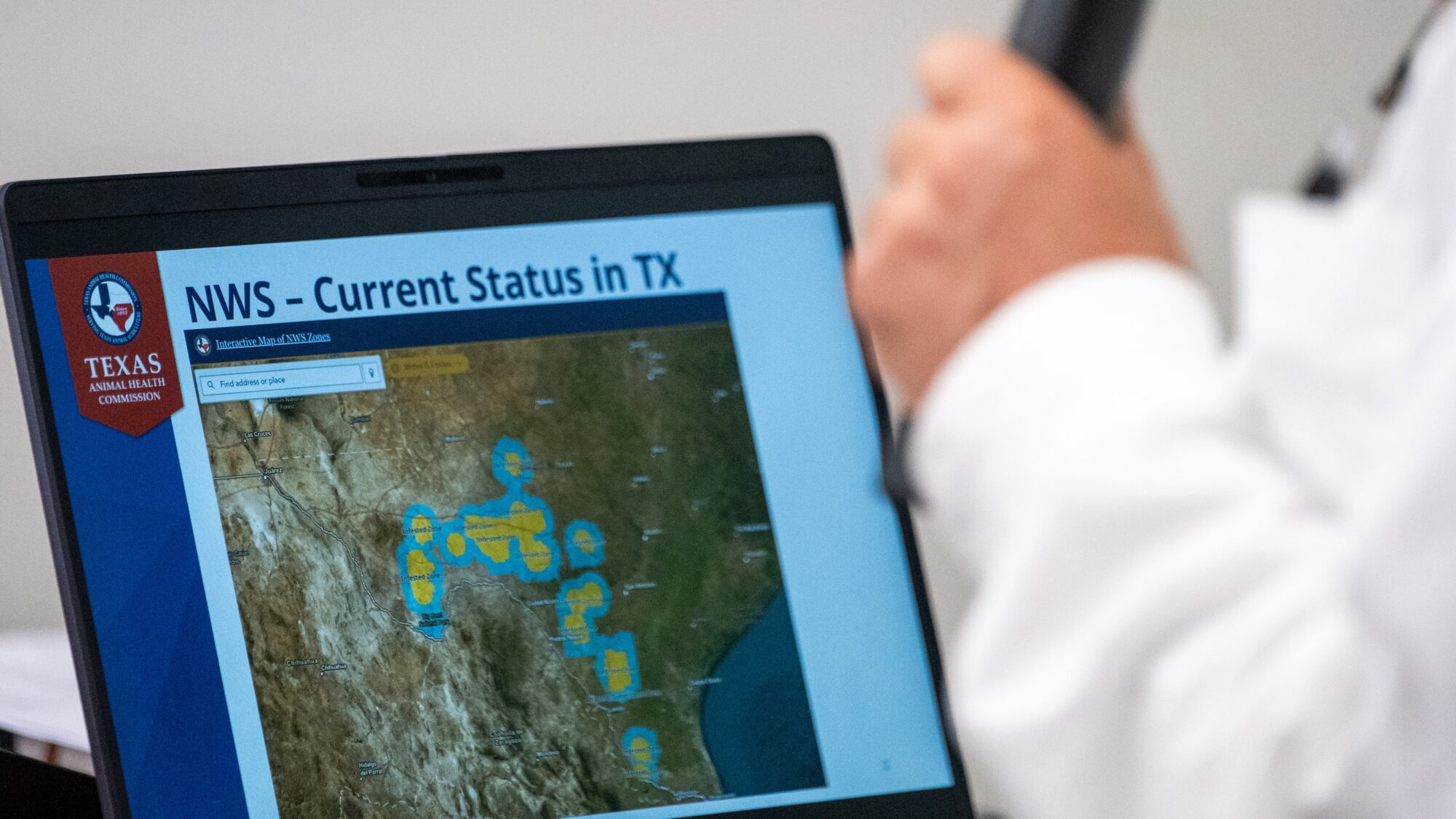
He displayed a map showing that the TAHC has established “infested zones” extending to a minimum radius of 12 miles from a confirmed location where an infestation was detected. The current infested zones stretch from the Rio Grande Valley to San Angelo. TAHC has implemented restrictions on movement between infested and non-infested zones, requiring producers to submit livestock for inspection, treatment and permits before moving.
Munger stressed the importance of tracking animal movements to prevent potential infestations from spreading.
“The best thing you can put on your animals is your eyes,” Munger said. “Be diligent in checking any mammal on your property for wounds, lesions or any tissue that the New World Screwworm can thrive in.”
Keeping Wildlife Safe
Kory Gann, director of the Big Game Program within the Texas Parks and Wildlife Department's Wildlife Division (TPWD) addressed NWS infestations in wild animals.
“Wildlife poses a challenge for monitoring the spread of the New World screwworm compared to livestock,” Gann said. “Unless they are in a captive setting, these animals can be hard to keep eyes on.”
Gann stated that, to date, TPWD has conducted outreach, including contacting more than 7,000 landowners to educate them about the issue, hosting 45 workshops on the New World screwworm, and training more than 1,000 game wardens and state park personnel to monitor for the screwworm's presence.
Additionally, Gann says the department has conducted more than 5,000 animal investigations with no confirmed cases and utilizes a network of hundreds of game cameras at state parks and wildlife management areas to support monitoring.
The A&M System Fighting on the Front Lines
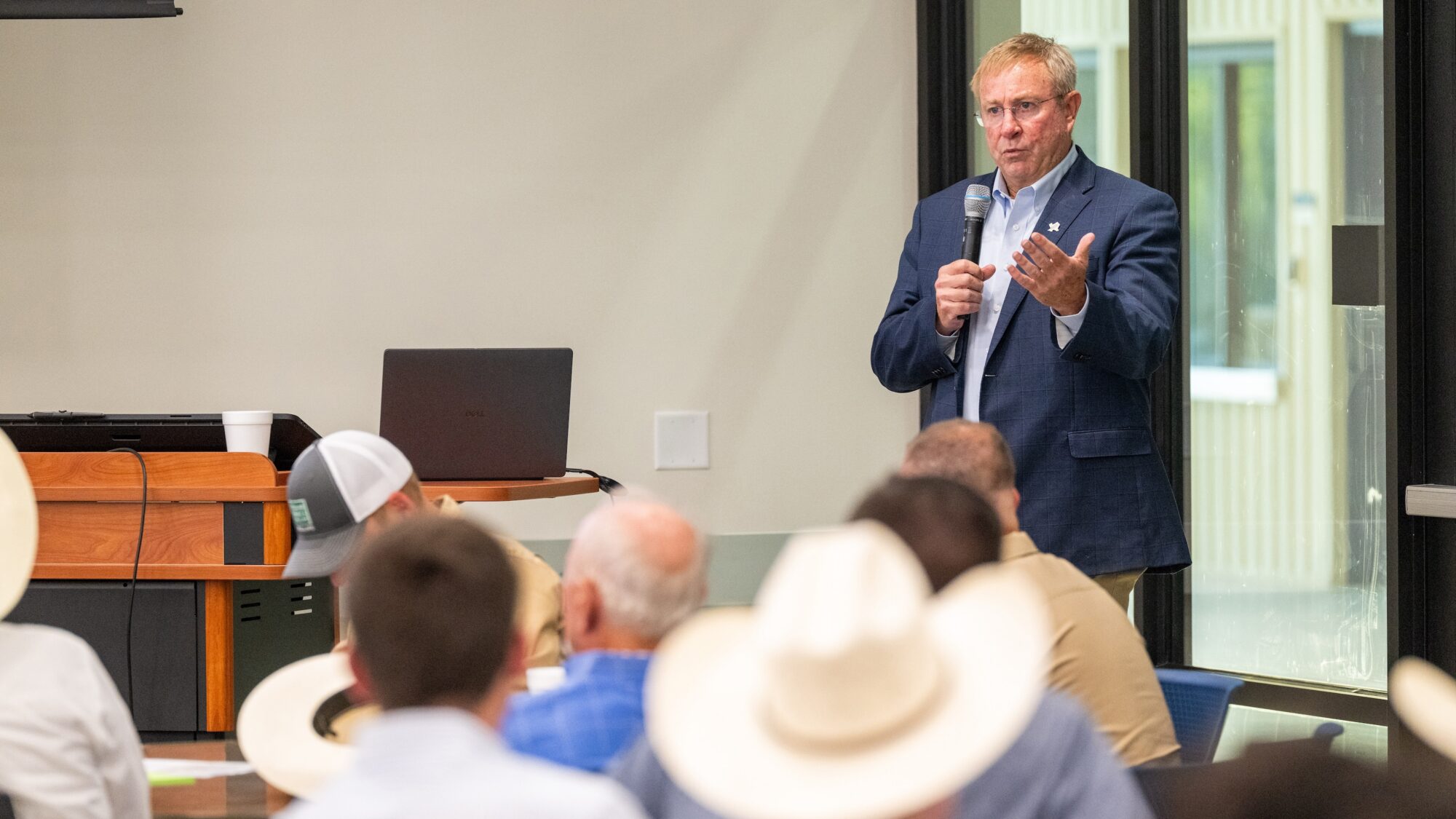
Dr. G. Cliff Lamb, director of Texas A&M AgriLife Research, outlined efforts within The Texas A&M University System to stay at the forefront in the battle against NWS. He said Texas A&M AgriLife began developing its own task force to monitor the spread of NWS in 2024, after the fly was observed moving northward from Central America. Lamb added that Texas A&M AgriLife has hosted nearly 300 educational programs on the New World screwworm since 2025.
“The best thing you can do is inspect, report and protect your animals and wildlife,” Lamb said.
Eradication Efforts Taking Flight with Sterile Flies
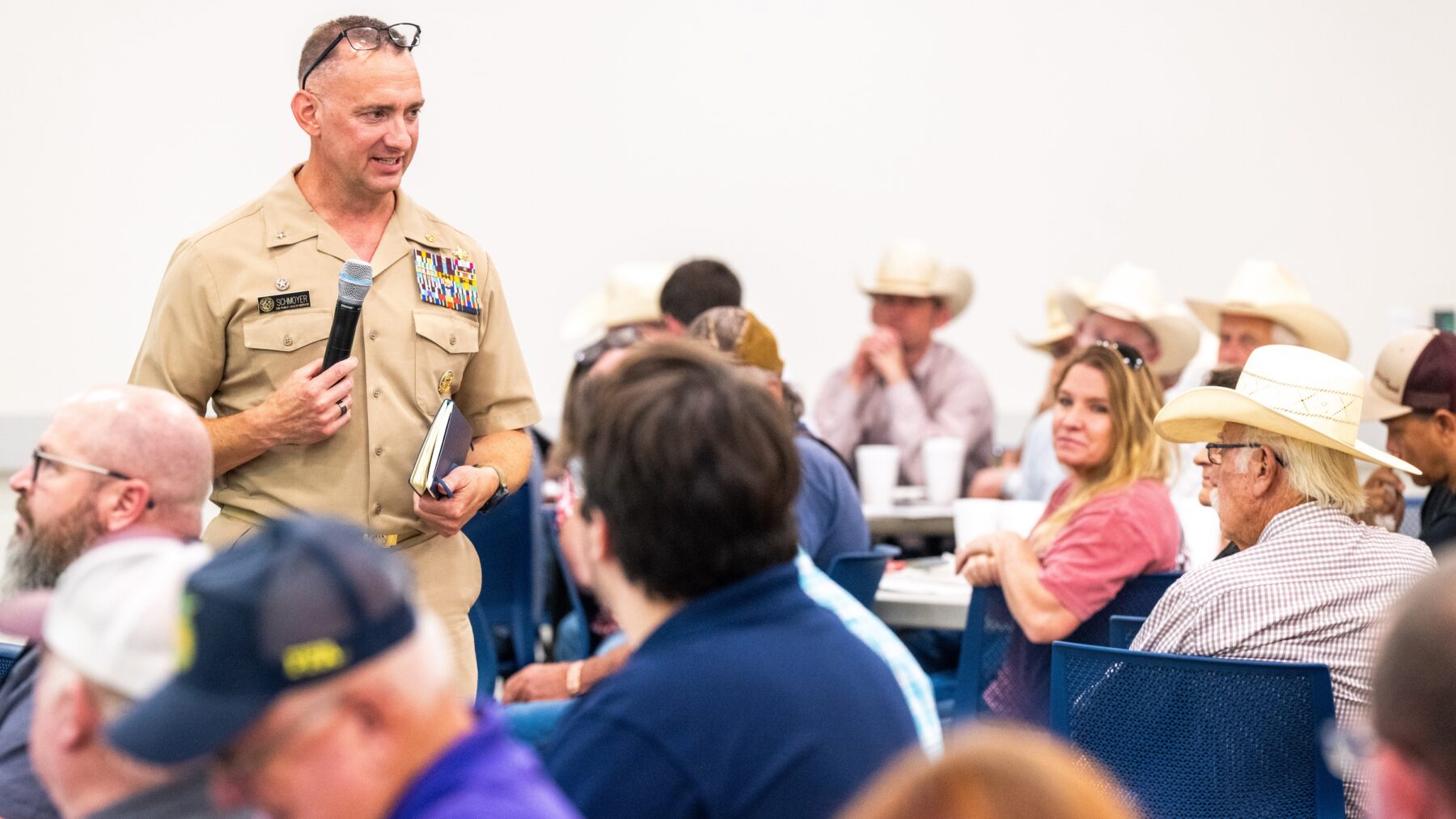
Rear Admiral Michael Schmoyer, an officer of the Commissioned Corps of the U.S. Public Health Service, serves as associate administrator for the U.S. Department of Agriculture's Animal and Plant Health Inspection Service and director of the New World screwworm Directorate. He explained that the main method to combat the NWS fly is to bioengineer sterile flies and release them into the environment where NWS flies are present. Over the course of a few life cycles–with flies living for a few weeks–populations start to die out due to the lack of fertile specimens in a given area. Schmoyer said the sterile fly program, which was utilized in the 20th century to great effect, is still being deployed to combat the spread.
He said a facility in Panama is currently producing 100 million sterile NWS flies per week. In addition, a new facility is under construction at Moore Air Base in Edinburg, and a facility in Mexico that produced sterile fruit flies is being converted to produce sterile NWS flies to help in the fight. Schmoyer said that at full capacity, several hundred million sterile flies can be grown in a week.
Schmoyer stated that the U.S. is sparing no resource to combat what could be a deadly outbreak if left unchecked.
“The New World screwworm can infest a wound as small as a tick bite, so it can spread undetected very easily,” Schmoyer said. “But we are doing all we can to handle it—and handle it quickly. We can't take decades to eradicate the fly like last time.”
East Texas A&M's Role in the Response
Texas A&M AgriLife and several Texas A&M University System institutions have taken the lead in the fight against the New World screwworm. Notably, President Donald Trump selected A&M System Regent John Bellinger as the United States Department of Agriculture's senior advisor for New World screwworm preparedness, putting the A&M System squarely on the front lines of combating the outbreak.
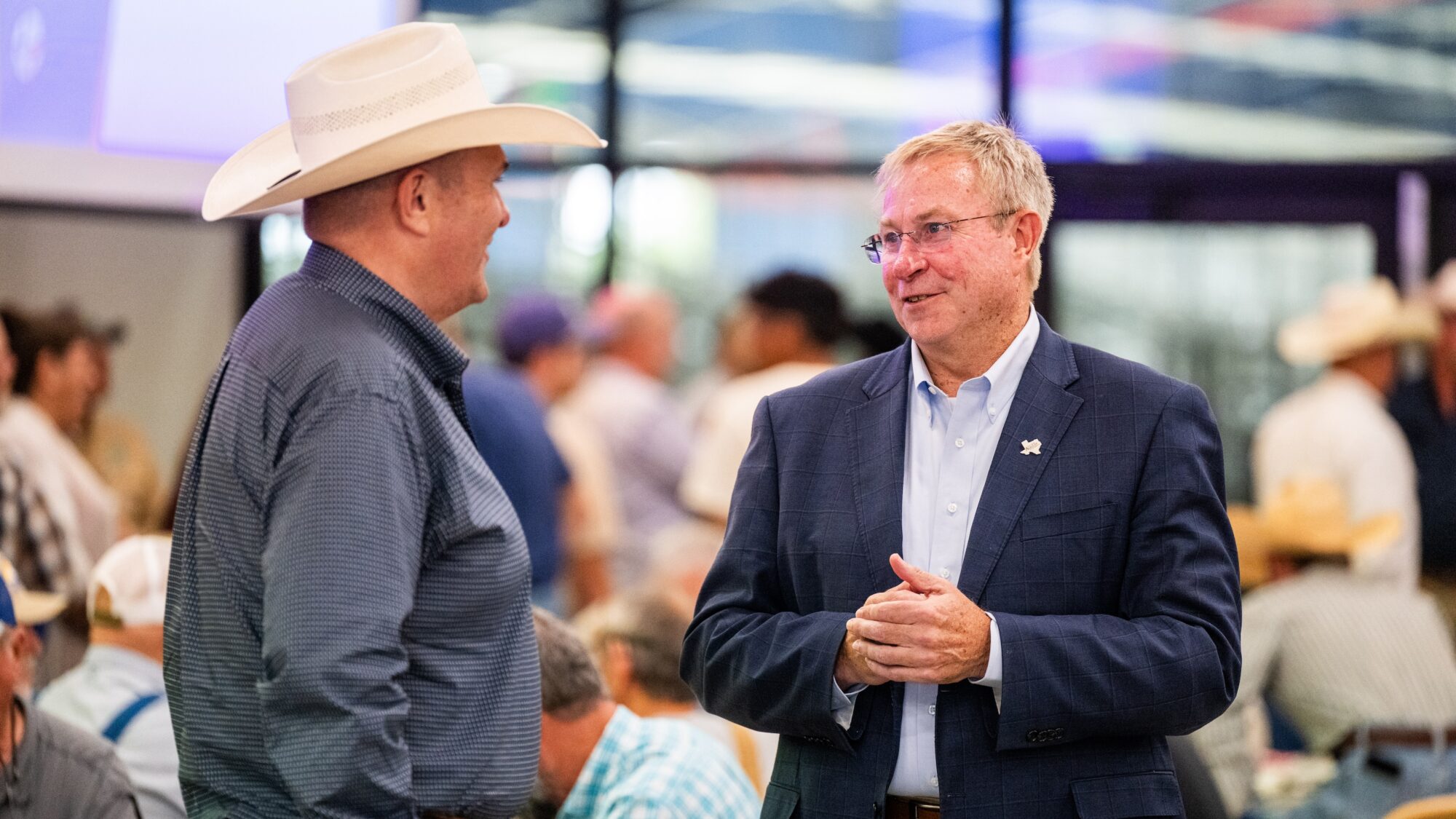
At East Texas A&M, CASNR Dean Bryan Rank said that the college has developed a surveillance protocol to monitor livestock in the university's herd.
“The Texas A&M System has been actively involved in the NWS response. Locally, we are actively monitoring all animals at the university ranch and following the surveillance, detection, and treatment guidelines recommended by Texas A&M AgriLife,” Rank said. “In consultation with AgriLife and our consulting veterinarian, we have trained our staff in surveillance, detection, and sample collection. We have also prepared treatment regimens and a reporting protocol should a suspected case of NWS be identified.”
Spreading Important Knowledge to the Community
Lamb said that seeing so many people eager to learn the latest on the NWS situation shows its impact.
“The fact that so many people who live far away from the closest confirmed case wanted to hear this information demonstrates that this is an important issue,” Lamb said. “Knowledge is key. This turnout shows that the industry is passionate about doing the right thing and staying educated.”
Rank added that the night was special for ETAMU, as it connects local producers with the university and its resources.
“Tonight was a great opportunity for local producers to connect with these experts that we were able to host through our many partnerships and collaborations,” Rank said. “The A&M System has been a leader in the screwworm response from the very beginning, and we are happy to be a part of that.”
For more information on the response to the New World screwworm, visit AgriLife's online resources.