



New Epidemiology Program Aims to Prepare Students to Track Disease and Improve Community Health
As public health organizations increasingly rely on data to guide decisions, East Texas A&M University is launching a new Master of Public Health (MPH) in Epidemiology program designed to prepare graduates for careers investigating disease trends, analyzing health data and informing public policy.
Previously offered as a concentration within the university’s MPH program, epidemiology is now available as a standalone degree, allowing students to receive more specialized training in the field.
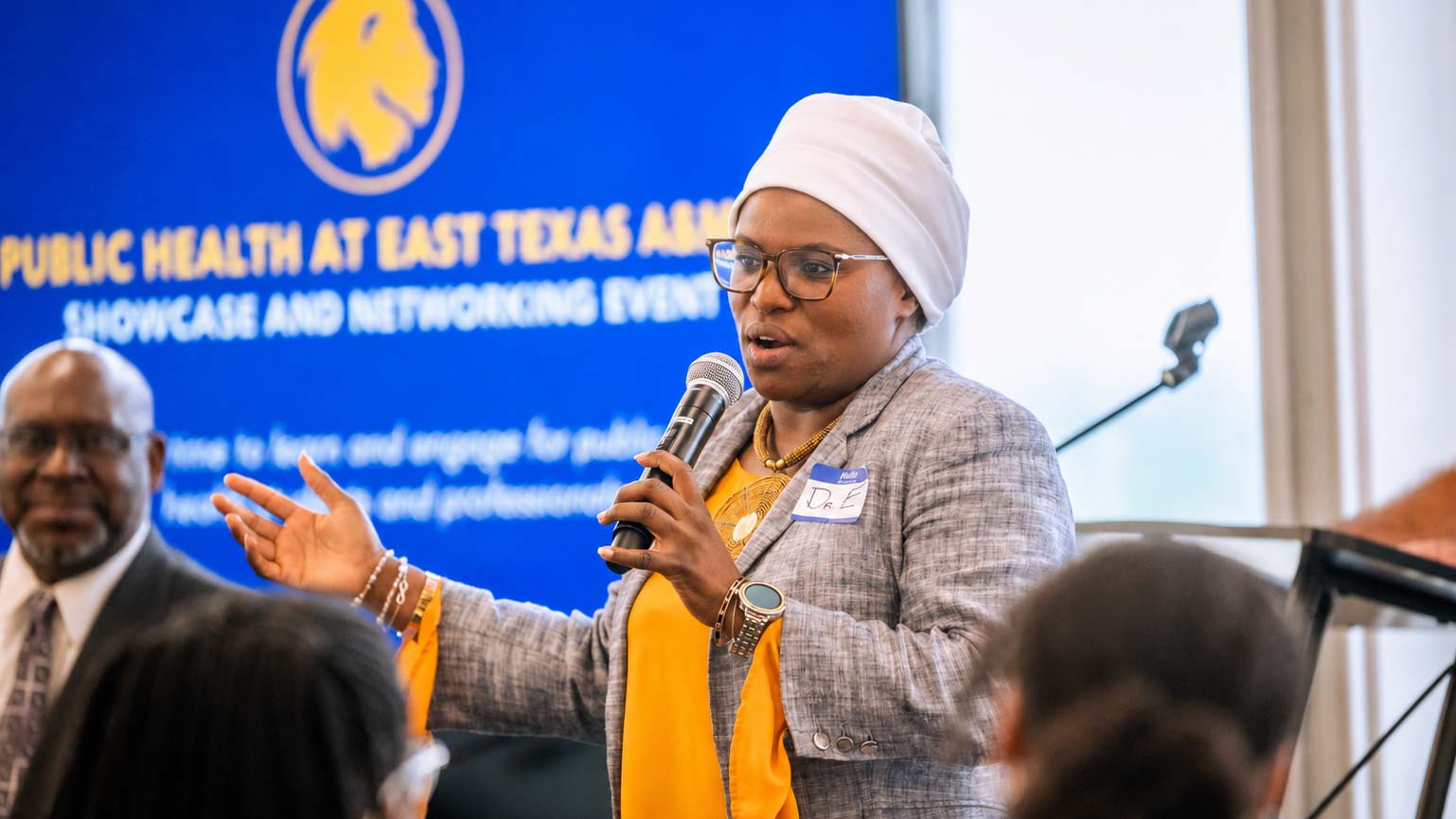
Dr. Elizabeth Wachira, associate professor of public health and program director, recently discussed the new program, what epidemiologists do and why the profession is growing in demand.
What is the new MPH in Epidemiology program, and why was it created?
The standalone MPH in Epidemiology was developed in response to student interest and workforce demand for a degree specifically focused on epidemiology.
“We were seeing a lot of students interested in the epidemiology aspect of public health,” Wachira said. “Students wanted a degree that clearly reflected that specialization, and organizations recognize the value of a degree in this field.”
Separating epidemiology from the broader public health degree also allows faculty to build a curriculum centered on epidemiological methods, data analysis and disease investigation.
What exactly is epidemiology?
Wachira describes epidemiology as the science of tracking, measuring and understanding disease.
“Epidemiologists investigate diseases, quantify them and try to predict what is happening and what may happen in the future,” she said.
During the COVID-19 pandemic, epidemiologists helped identify disease transmission patterns, conduct contact tracing and evaluate the effectiveness of interventions such as vaccines and public health measures. Their work continues long after an outbreak, helping researchers and policymakers understand disease risk factors and determine which prevention strategies are most effective.
“Epidemiology provides the evidence,” Wachira said. “It helps us understand what works, what doesn’t and where resources should be directed.”
What skills do students develop in the program?
Students learn to collect, manage and analyze health data while developing the communication skills needed to translate complex information for diverse audiences.
While epidemiology involves statistics and data analysis, Wachira emphasized that students do not need a mathematics or science degree to succeed.
“There are no specific undergraduate degree requirements,” she said. “We see students come from backgrounds in communications, marketing, mathematics, public health and many other disciplines.”
Students who enjoy problem-solving, critical thinking and working with data often find the field appealing. Equally important is the ability to communicate findings to health professionals, policymakers and the public.
“You may analyze the data, but you also have to explain what it means,” Wachira said.
How is the program structured?
The MPH in Epidemiology is primarily offered online, making it accessible to students across Texas and beyond. Those seeking in-person instruction or international students who require an in-person option may complete coursework through the university’s Dallas location.
The non-thesis program consists of 42 credit hours and can be completed in two years of full-time study.
Students begin with foundational public health coursework before progressing into specialized epidemiology classes. The program also includes a five-credit-hour internship or applied learning experience that allows students to apply classroom knowledge in professional settings.
What kinds of internship opportunities are available?
Internships can take place in a variety of organizations that use epidemiological methods and health data.
Students may work with county and regional health departments, hospitals, nonprofit organizations or other agencies that collect and analyze information to guide decisions.
“Anywhere data needs to be managed, understood and used to make decisions can be a place for epidemiological work,” Wachira said.
The internship component helps students gain practical experience while building professional networks and career readiness.
What career opportunities are available for graduates?
According to Wachira, demand for epidemiologists and data-focused professionals continues to grow as organizations generate and rely on increasing amounts of information.
Graduates may pursue careers in public health agencies, healthcare systems, research organizations and private industry. Skills developed in epidemiology also transfer into related fields such as informatics, data management and health analytics.
“We’re living in an era of data,” Wachira said. “Organizations understand the importance of having people who can manage, analyze and interpret that information.”
What makes East Texas A&M’s program unique?
Wachira points to the university’s student-centered approach and close faculty relationships as key advantages.
Because of the program’s size, faculty members work closely with students throughout their graduate studies, providing mentorship, career guidance and individualized support.
“We get to know our students over time,” Wachira said. “We’re able to see their growth, understand their goals and connect them with opportunities that fit their interests and strengths.”
Students also have opportunities to build professional connections through the department’s annual public health showcases, which bring together employers, practitioners and community organizations. Many students have secured internships and employment opportunities through relationships developed at these events.
For Wachira, the program’s ultimate goal extends beyond career preparation.
“The ideal student is someone who wants to make a difference,” she said. “They want to be part of finding solutions, informing policy and helping create healthier communities.”