



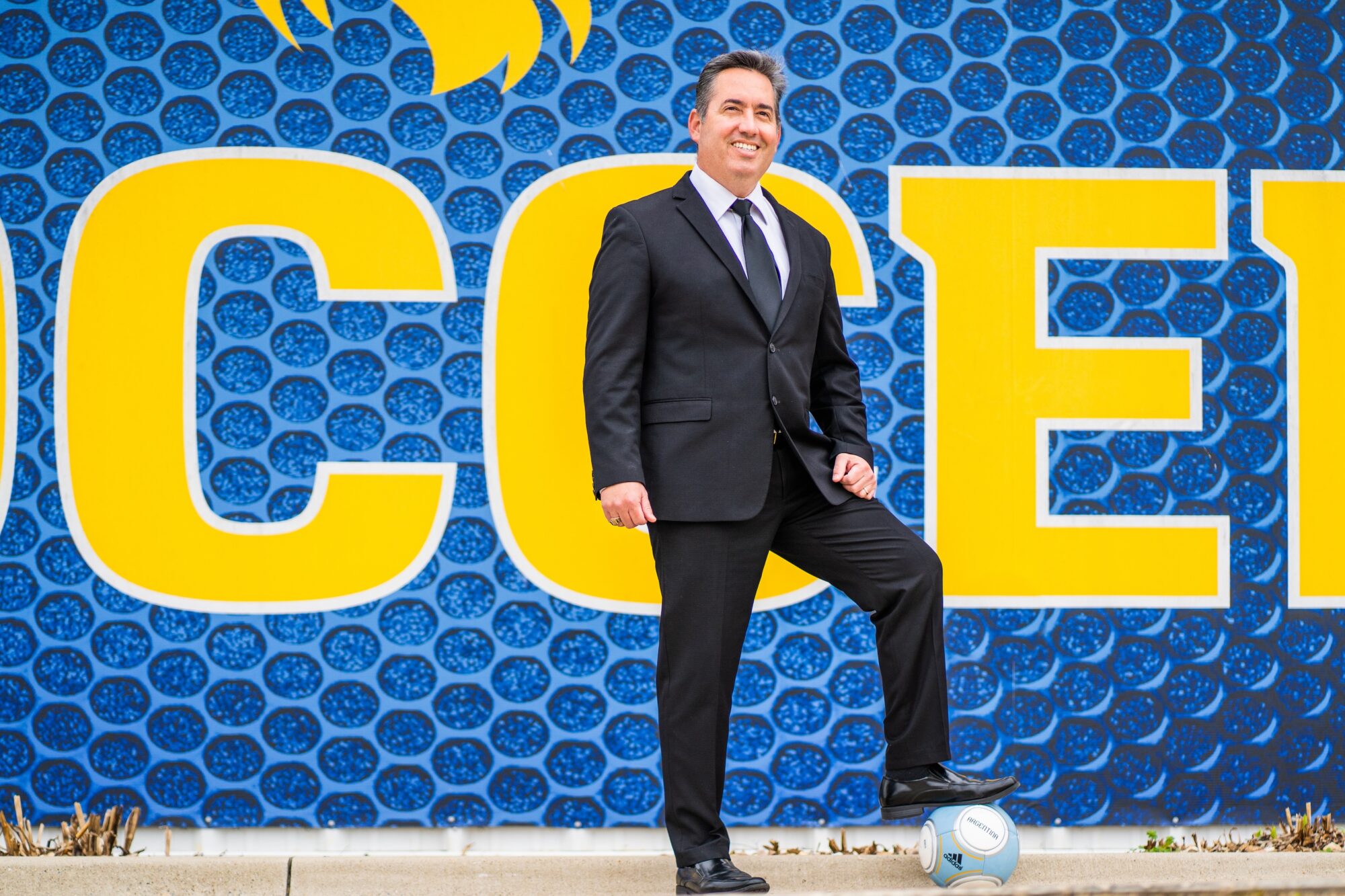
ETAMU Professor Says 2026 FIFA World Cup Is Transforming Soccer Culture in the U.S.
After attending four FIFA World Cup tournaments spanning more than 30 years, East Texas A&M professor Dr. Robert Rodriguez shares why this year’s tournament marks a turning point for soccer in America.
As millions of Americans have tuned in to the 2026 FIFA World Cup, the tournament has become more than an international sporting event. For many, it represents a defining moment in the popularity of soccer across the United States.
Few have witnessed that evolution as closely as Dr. Robert Rodriguez, professor of political science at East Texas A&M University. A lifelong soccer fan with family roots in Argentina, Rodriguez has attended FIFA World Cup matches in 1994, 2002, 2018 and 2026, giving him plenty of perspective on how the tournament—and Americans’ enthusiasm for it—has changed over the past three decades.
From the atmosphere inside stadiums and fan festivals to the growing popularity of Major League Soccer and the U.S. Men’s National Team, Rodriguez has watched soccer evolve from a niche sport in America to one that now captivates millions of fans.
Rodriguez has also published several scholarly articles on topics such as soccer culture in America, and nationalism and sports in Argentina. In 2025, Rodriguez presented “Soccer Diplomacy: How World Cup Fandom Led to a Restoration of Political Relations between Argentina and Bangladesh” at the 67th Annual World Social Science Association Conference in Seattle, Washington. At East Texas A&M, he has taught undergraduate and graduate courses on the intersection between sports and politics.
We recently spoke with Rodriguez about his lifelong passion for the game, his experiences attending World Cups around the globe, and why he believes the 2026 tournament will have a lasting impact on soccer culture in the United States.
Start by telling us about your personal relationship with soccer and the World Cup.
My parents are originally from Argentina, so you can imagine that soccer has been ingrained in my family's culture. I have vivid memories of the 1986 World Cup, which Argentina won, and I have personally attended games at the 1994, 2002, and 2018 tournaments, as well as the current World Cup. I attended Argentina's group-stage match against Algeria this summer in Kansas City. It was special for me not only to see Argentina's national team but also, as a former Kansas resident for 15 years, to be back in the state.
I've also attended the Fan Festival at Dallas' Fair Park and a few watch parties at the city's Klyde Warren Park. I have been supporting both Argentina and the U.S. Men's National Team (USMNT) through this tournament. I was privileged to see the USMNT play as far back as 1991 in the inaugural Gold Cup tournament, so I have been a fan for quite some time.
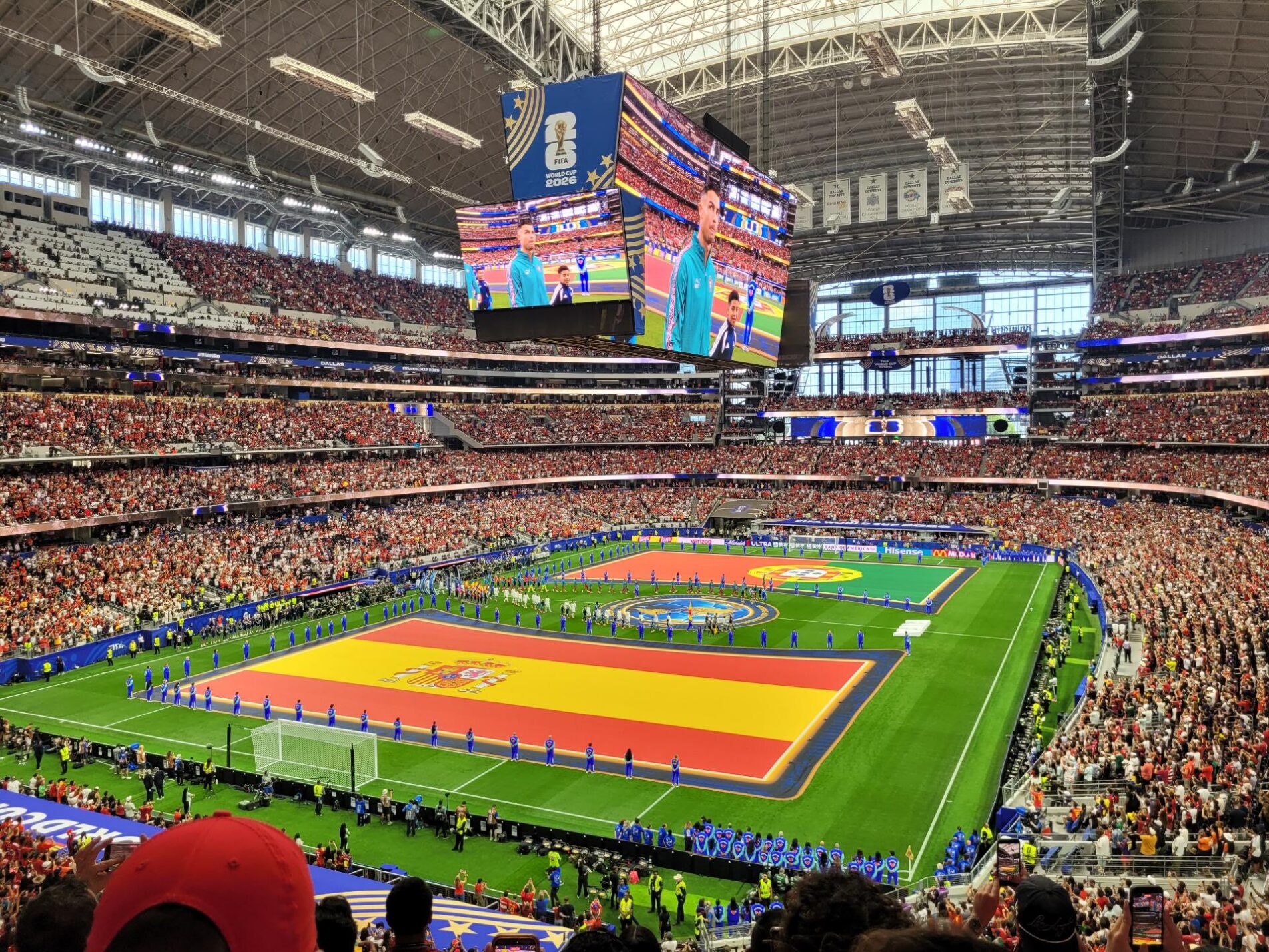
Another connection to this year's World Cup is my wife, who has served as an official volunteer with FIFA's Media Center in Dallas, providing language and interpreting services. She has worked during pre-match press conferences to coordinate any translation needs between players, coaches and the media. Importantly, she was present in the room during the press conference before the Portugal-Spain match, where superstar Cristiano Ronaldo stated that this World Cup, his sixth, would be his last. She told me that Ronaldo was funny, witty and personable. He has a reputation for seeming uncaring and arrogant, but she described him as the exact opposite, which was interesting to hear.
So, it's obvious that soccer has been a lifelong passion for you. From your perspective, what are some of the key differences between this World Cup and previous tournaments with respect to fan engagement, media coverage and overall cultural impact in the United States?
Because I've been following the sport for so long, I have been able to see, from a certain vantage point, essentially the entire evolution of U.S. soccer. In the early 1990s, soccer was seen as a Latin American or European sport, and the average American hardly reacted to it at all. I mean, at that time, the United States did not have its own professional domestic soccer league. One of the conditions for the United States to host the 1994 World Cup was the creation of a professional league, and that condition was met with the launch of Major League Soccer (MLS), which is in its 30th season this year.
While there was some initial excitement for soccer in the U.S. following the creation of MLS, it quickly died out. I would sometimes attend a midweek game for the Kansas City Wizards in the late 1990s, and there would be maybe 700 people there in Arrowhead Stadium, which can seat up to 70,000. That was the state of men's soccer in the country. The Women's National Team is very successful. They've won multiple Women's World Cups, multiple Olympic Gold Medals, and plenty of other accolades, but still had a difficult time breaking into the national sports consciousness, unlike other successful sports franchises.
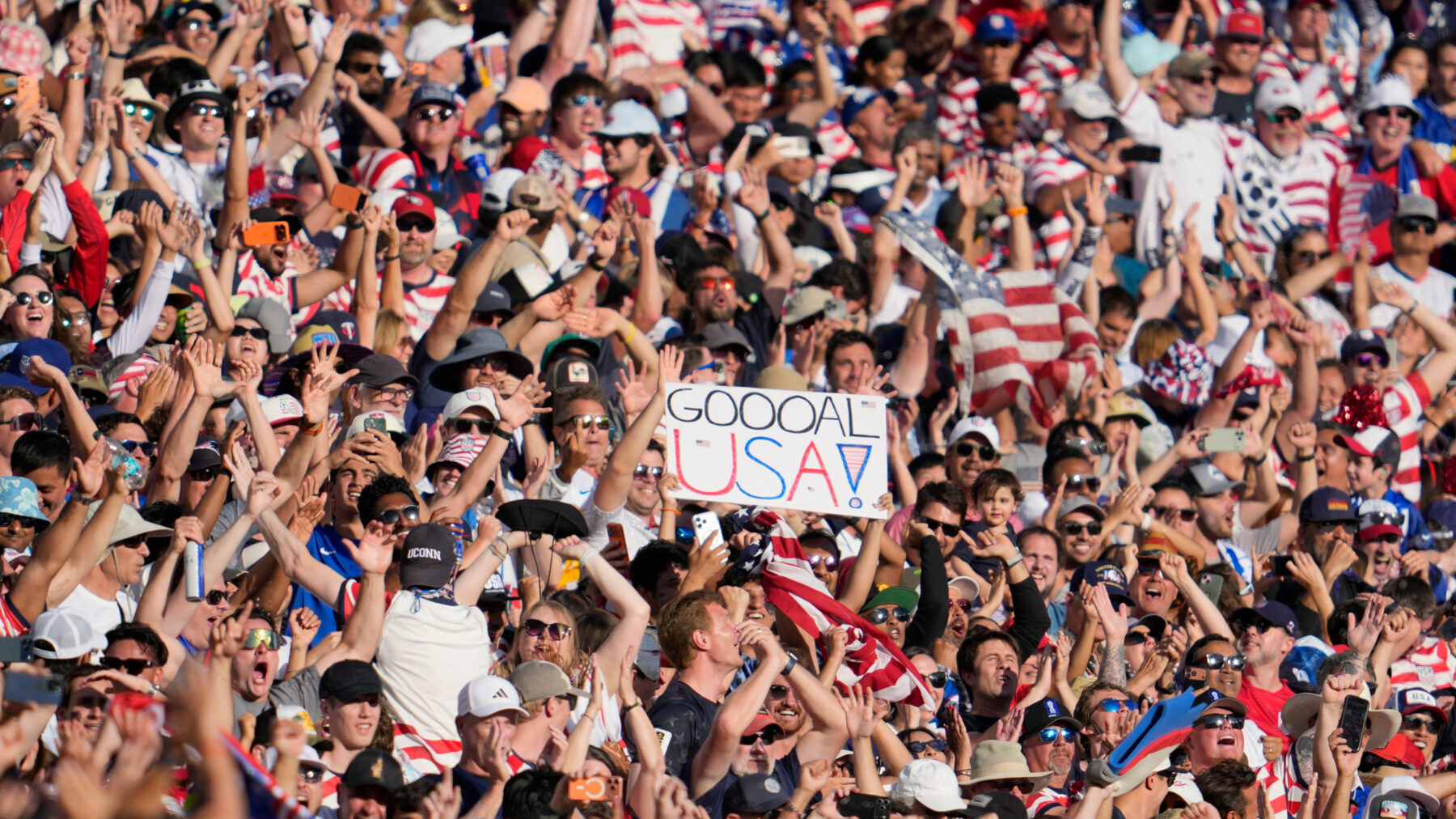
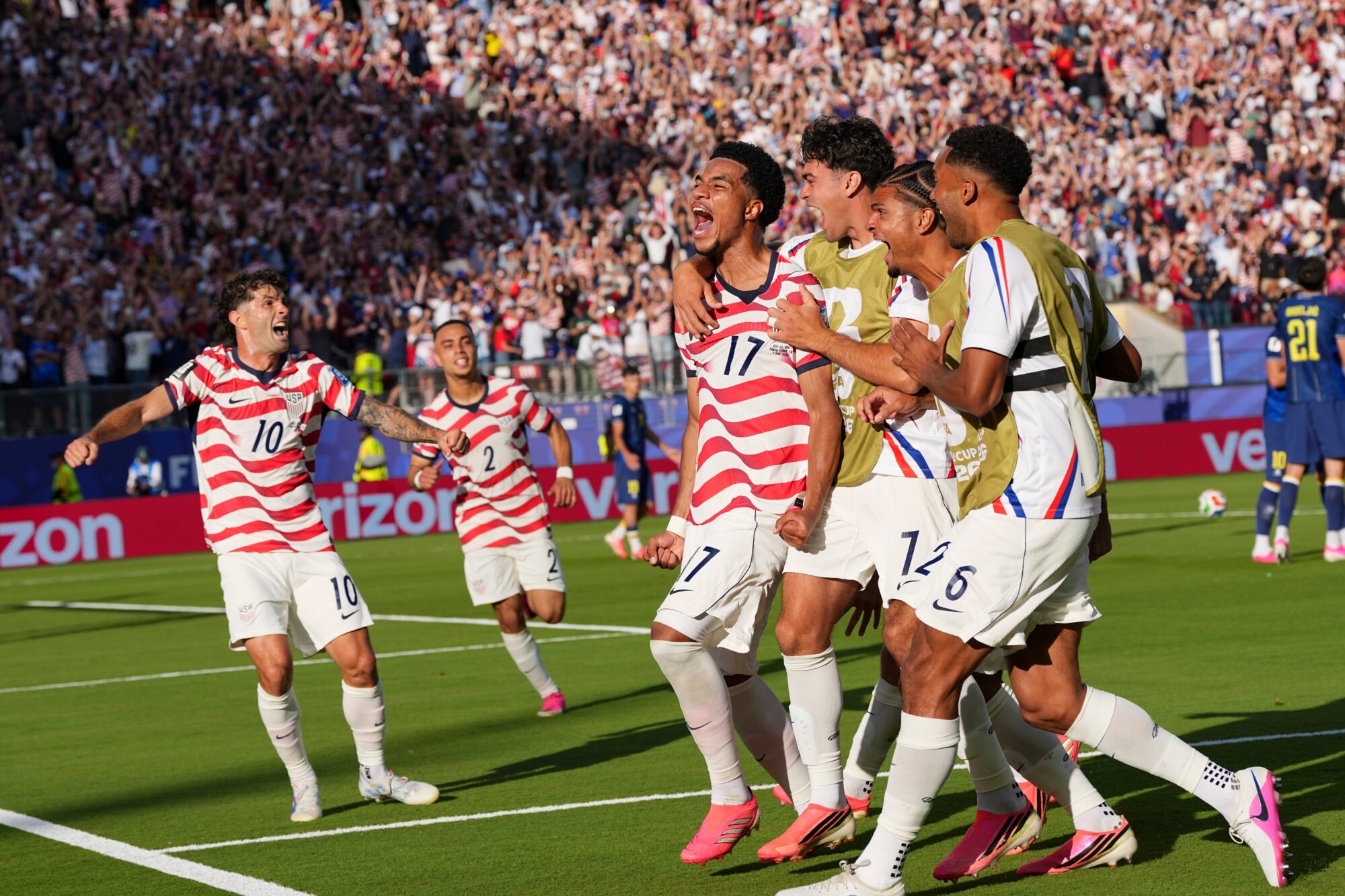
Since then, however, soccer has made great strides toward being considered a major sport in the United States, both domestically and in international competitions. But this World Cup has been nothing like I've seen with the amount of attention the USMNT has received and how soccer has become a topic of conversation among the general public. I read that the U.S.'s match against Belgium in the Round of 16 of this year's tournament was the most-watched soccer game in American history, with over 40 million viewers tuning in.*
Now, soccer is at a point in this country where even casual or non-fans have been captivated by the spectacle. There's zero question that, compared to 1994, soccer is now on many Americans' radars.
That's beautiful for me to see, as someone who was there in 1994, where it was definitely viewed as a novelty or a curiosity.
*Editor's note: This number was surpassed upon further findings by England and Mexico's match a day prior, which was seen by an estimated 44 million in the United States. The U.S.-Belgium match still stands as the most-watched English-language soccer game ever broadcast in the U.S.
You mentioned that you first attended a World Cup game in the U.S. in 1994. What was the American public's reaction that year, compared to this year?
It's night and day. I can distinctly remember listening to a radio station in 1994—just a regular music station, not a news or sports or talk station—and they had to explain, in great detail, what the World Cup was. It was so foreign to many people at that time. Now, you don't hear people talking about the World Cup in that regard. People know well how significant it is and are engaging in casual conversation and ‘water cooler talk' with coworkers, acquaintances, or even strangers about the matches.
The way FIFA and World Cup organizers interact with fans has also shifted drastically. You can enter most any retailer and find something World Cup-related to purchase, and lots of team gear. In 1994, if you wanted it, you had to get it at the matches. Also, the creation of fan zones and fan festivals outside match venues is another big step up, helping fans interact with the tournament in ways that didn't exist back then.
The fact that people, especially non-diehard fans, actually care that the USMNT lost to Belgium reveals how much the sport has become a larger part of our nation's culture. Historically, expectations for the men's team have been low. Now, people are expecting the team to make a deep run into the knockout rounds. That's now the measure of success, which would have been unheard of 30 years ago.
It's interesting to hear your firsthand accounts of the previous tournament in the U.S. It's no secret that there have been throngs of international visitors to the U.S. since the tournament began. How do you think interactions between Americans and international fans have changed the way people view each other’s countries?
People have really been coming together during these games. Cities across North America have seen an influx of visitors from multiple nations. What has been refreshing to see is that there have been very, very few negative incidents surrounding fan behavior at the matches and in host cities. In fact, the opposite is true.
I'll give you the perfect example: Each competing team has selected a North American city as effectively their ‘base camp,' where they lodge, train, and so on between games. Months ago, the Algerian national team selected Lawrence, Kansas, as its base camp. For those unaware, Lawrence is a city of about 100,000 people that is home to the University of Kansas. It is very much your standard midwestern college town. However, the entire city really took to the Algerian team and embraced them as their own. You could see tons of Algerian flags, scarves, jerseys and other merchandise around town. The Algerians reciprocated by holding open practices, interacting with fans and similar activities.
This extended to the games, where, for Algeria's final group-stage game in Kansas City, Algerian fans created a massive banner visible on TV that read “Thank you, Lawrence.” The banner was then gifted to the city and displayed downtown. These two entirely different cultures are organically united by soccer. It's just one example, but there have been several across the many host cities.
How have the events of this tournament tied into some of the hot-button issues facing our country in this moment?
If you take a look at the USMNT, you will find several players who were born outside of the United States, or who were born here to parents who weren't citizens. For one of the team's most notable players of this tournament, Folarin Balogun, that was his situation. His mother was in Brooklyn visiting family when he was born, and he was born a U.S. citizen. He grew up in the United Kingdom, but chose to play for the USMNT.
We saw—during the tournament, no less—The United States Supreme Court upheld the concept of birthright citizenship under the Fourteenth Amendment. Basically, a child born on U.S. soil is automatically a citizen.
It's interesting to analyze the far-reaching implications of birthright citizenship in America and how it extends into the sporting sphere, where it can determine who can play for which nation.
Wrapping up, with all you've seen surrounding this tournament, do you see soccer cementing itself as a pillar of major American sports, and do you feel like this will create a stronger USMNT in the future?
I think in some ways, soccer is already at that point. For a long time, soccer has been a major participation sport among youth, both in communities with and without large immigrant populations. But now it's grown to something that can stand on its own as a professional, spectator sport.
This extends to the USMNT's style of play as well. In 1994, the U.S. was playing to “not lose.” But this time, you can absolutely see that the USMNT played with a style and flair that made it one of the most entertaining teams to watch in the early stages.
The fact that people care about it means that soccer matters in the United States. Otherwise, we probably wouldn't even be talking about it now. Despite the U.S. loss, I feel there is more momentum for soccer to continue growing here.
The final matches of the 2026 FIFA World Cup are just days away, with England facing France in the third-place match on Saturday, July 18, and Argentina versus Spain for the World Cup title on Sunday, July 19. U.S. fans can catch the action in English on FOX and in Spanish on Telemundo.