



Your Old Electronics Could Help Power Tomorrow’s Technology
ETAMU scientists are developing a process to recover a critical semiconductor material from electronic waste, helping reduce dependence on foreign imports.
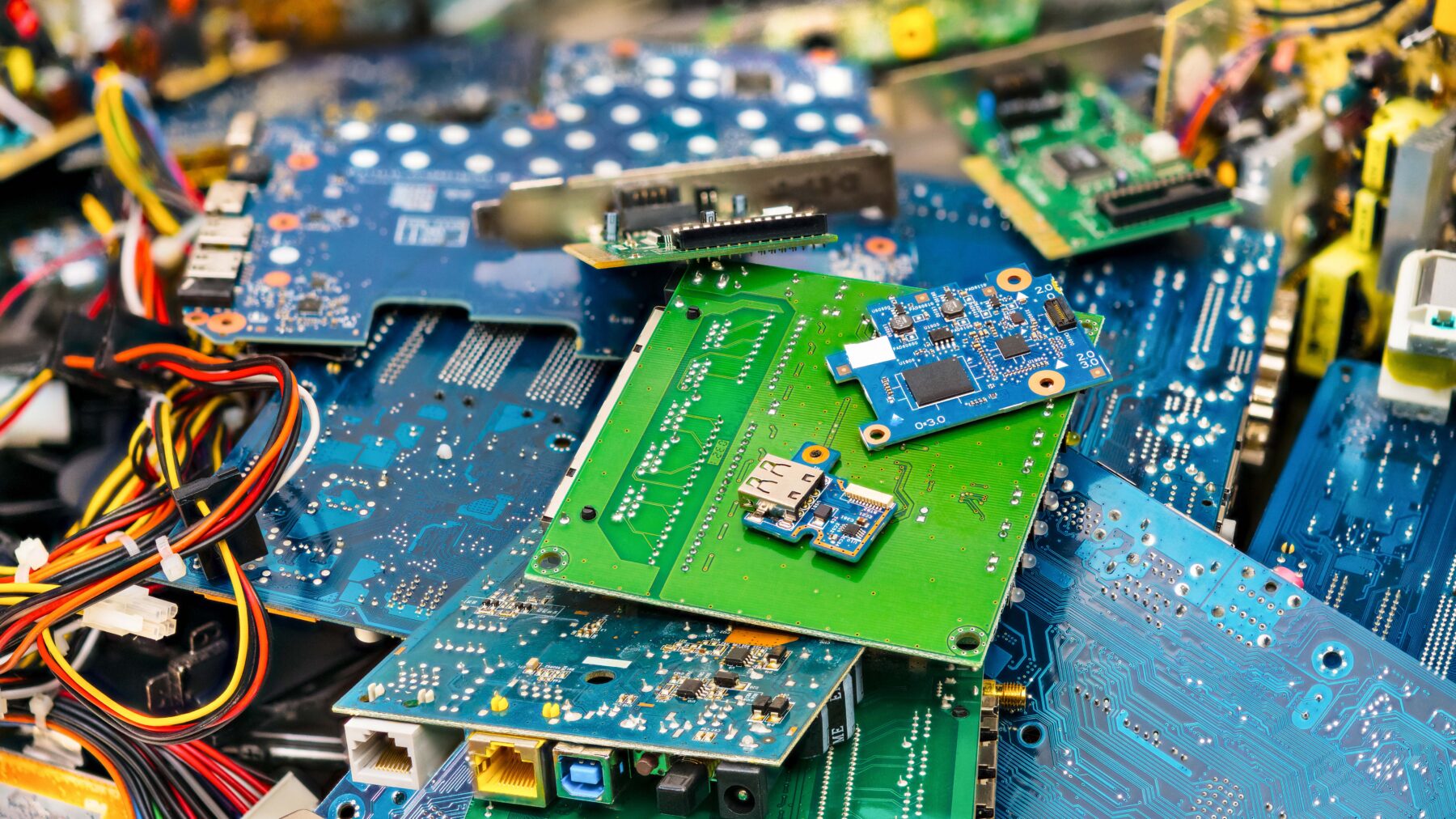
Researchers at East Texas A&M University are helping tackle one of the nation’s growing technology challenges by developing a process to recover a critical semiconductor material from discarded electronics. This research could one day strengthen domestic manufacturing, reduce reliance on foreign imports and create new opportunities for student researchers.
Dr. Ben Jang, Regents Professor of chemistry at East Texas A&M, is serving as principal investigator for the university’s role in a $250,000 Research Excellence Fund (REF) Collaborative Discovery award. The project, Sustainable Recovery of Gallium from GaN-Rich Electronic Waste, brings together researchers from East Texas A&M, Texas A&M University and Prairie View A&M University to develop an efficient method for extracting and purifying gallium from electronic waste for use in semiconductor manufacturing.
Gallium may not be a household name, but it plays a vital role in modern technology. Gallium compounds are essential components in semiconductors used in products ranging from LED lighting and electric vehicles to advanced communications systems and defense technologies. Yet the United States has had no domestic primary gallium production since 1987 and currently depends on foreign sources for the material, making it increasingly important to find sustainable ways to recover and reuse it.
Rather than allowing valuable materials to end up in landfills, Dr. Jang and his research team is developing a multistage chemical process to recover gallium from end-of-life electronics. The goal is to produce high-purity gallium oxide, a material used in semiconductor manufacturing, while reducing the energy demands and hazardous chemicals associated with conventional recycling methods.
“Our project is important not only because it turns electronic waste into a valuable product, but also because it helps reduce the United States’ reliance on imported gallium,” Jang said. “If we can recover gallium from the electronics we already use every day, we’re creating another pathway to support semiconductor manufacturing and strengthen our long-term economic and national security.”
The project combines expertise from across The Texas A&M University System, with each institution responsible for a different stage of the recovery process. Researchers at Prairie View A&M are leading the initial selective precipitation process, while Jang’s team at East Texas A&M is developing an integrated purification stage. Texas A&M researchers will focus on process intensification and producing device-grade gallium oxide suitable for semiconductor applications.
Jang said one of the project’s strengths is its collaborative nature.
“No one researcher has every piece of the puzzle,” he said. “By bringing together chemists and materials scientists from across the A&M System, we’re able to combine different areas of expertise to solve a much larger problem.”
Although the initial project is funded for 12 months, the research is intended to lay the groundwork for future large-scale efforts. If successful, the team hopes the process can eventually be adapted for industrial production, positioning the researchers to pursue larger grants from agencies such as the U.S. Department of Energy, the National Science Foundation and the Department of Defense.
The project will also provide valuable hands-on research opportunities for East Texas A&M students. Jang’s laboratory will include graduate researchers as well as undergraduate students, allowing them to contribute to research with potential environmental, economic and national security impacts while gaining experience in advanced chemical research.
For students interested in chemistry, materials science and sustainability, Jang said the project illustrates how fundamental scientific research can address real-world challenges.
“Every day we generate electronic waste, but much of it still contains materials that are too valuable to throw away,” he said. “If we can develop better ways to recover those materials, we’re not only protecting resources—we’re creating technology that could benefit manufacturers, the economy and society for years to come.”
The Department of Chemistry and Biochemistry at East Texas A&M offers students opportunities to work alongside faculty researchers on projects spanning environmental chemistry, materials science and other emerging fields. Through initiatives such as the REF Collaborative Discovery project, students gain firsthand experience addressing complex scientific challenges while contributing to research with the potential for broad societal impact.