



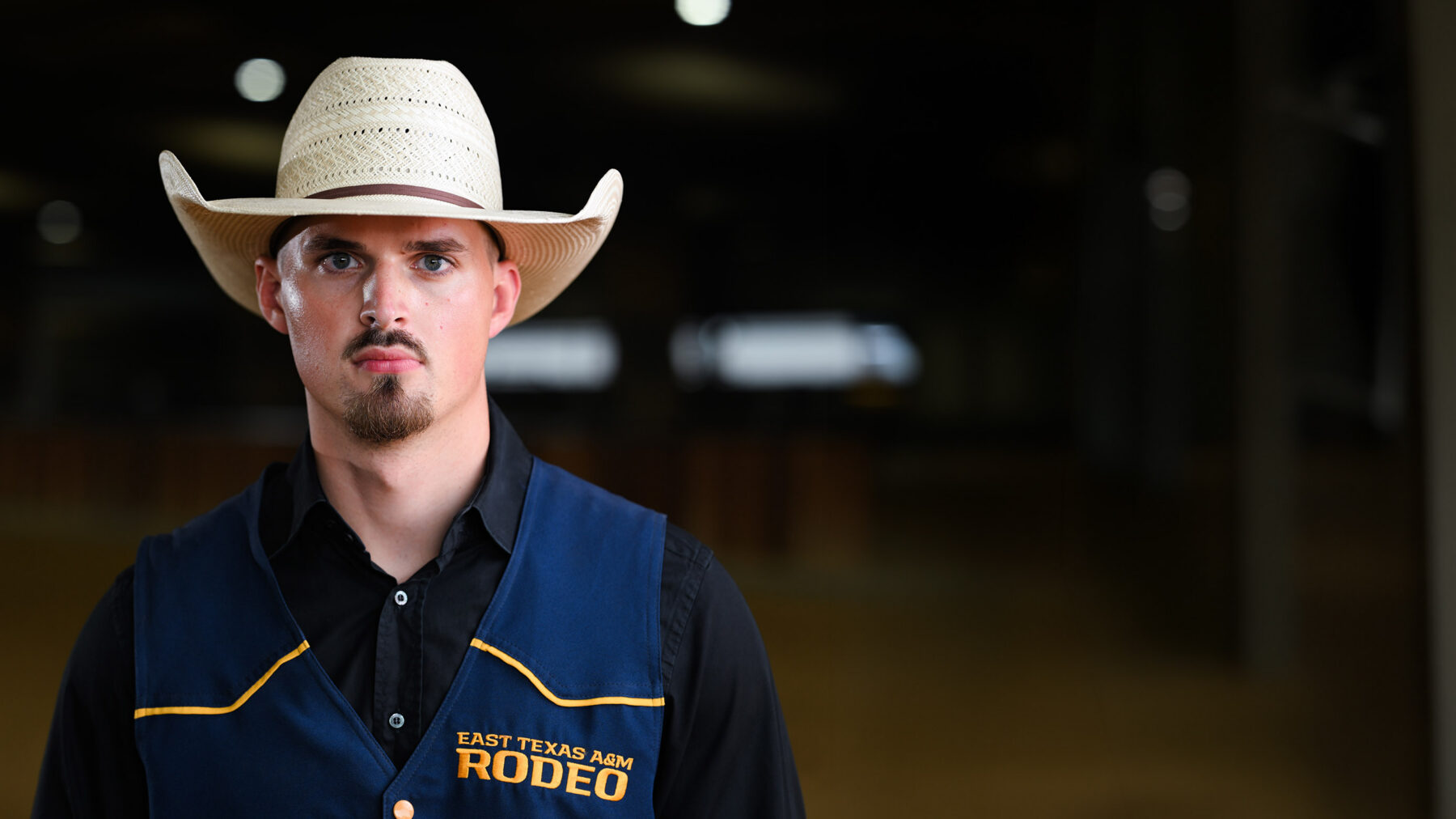
The Count of Commerce: Clemens Herberstein’s Thrill-Seeking Road to ETAMU Rodeo Team
Lion Saddle Bronc Rider and Austrian noble family member had never ridden a horse before deciding to embark on his rodeo journey.
Unique paths often lead students to East Texas A&M University. But you'd be hard-pressed to find a journey as unique as Clemens Herberstein’s.
Picture this: You're a first-year student in a foreign country majoring in animal science. You've never even ridden a horse before in your life, but you decide to try out for saddle bronc riding on a university rodeo team in Commerce, Texas. Who does something like that?
“I felt a draw to the rawness and intensity of rodeo. The more time I've spent in Texas, the more it looked like something fun to try,” said Herberstein, the kind of guy who would do something like that.
But let's back up. Clemens' story has a bit of history that's worth telling.
A Noble Legacy
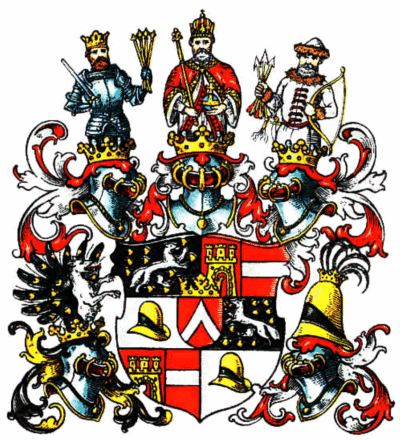
While the name “Herberstein” may not ring as many bells in America as say, “Windsor,” in Austria, it's a different story.
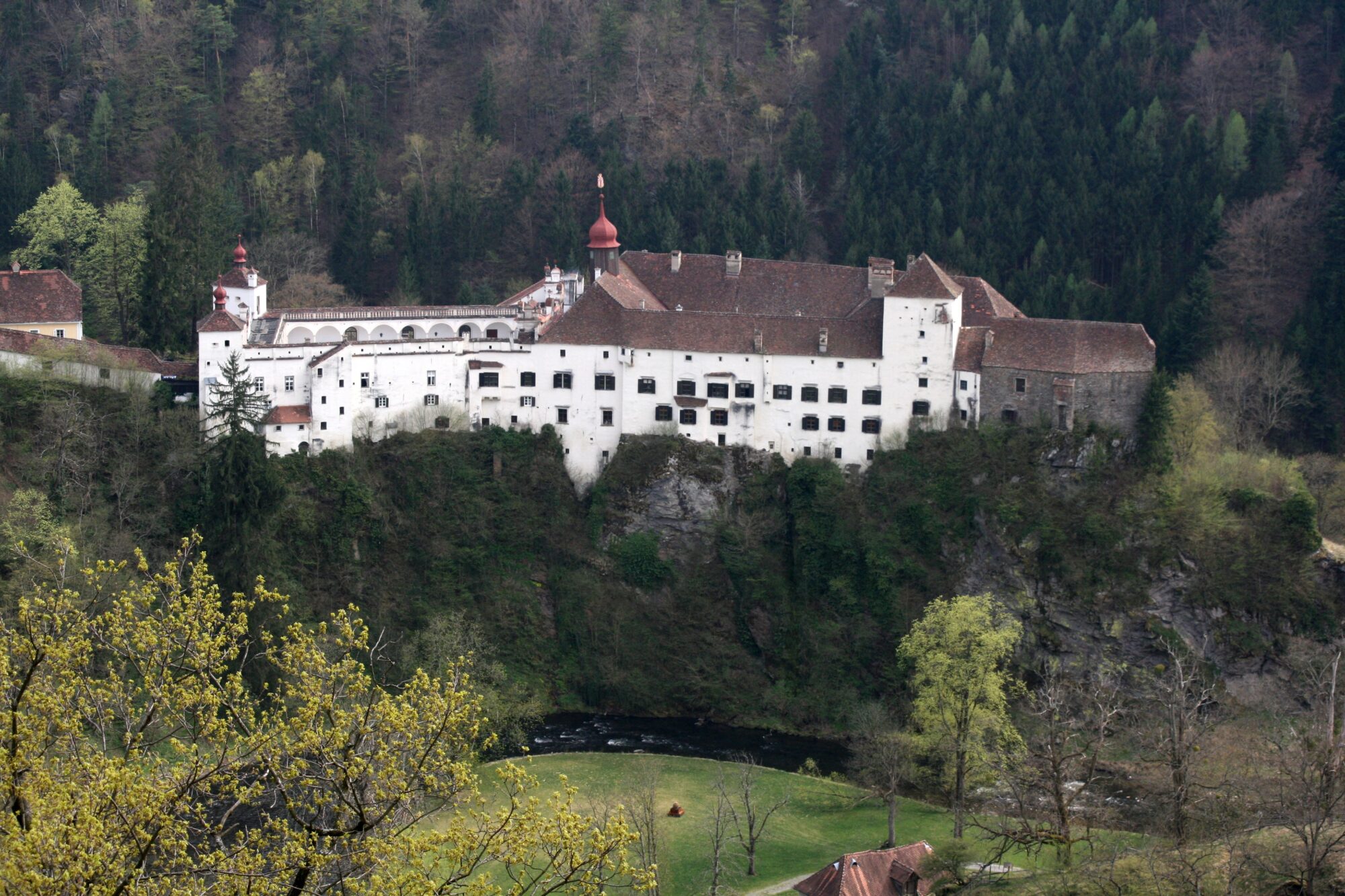
The Herberstein family can trace its roots in Austrian high society back to the 1200s, with a 700+ year-old castle to boot. Many renowned people bore the name throughout history, including Sigismund von Herberstein, a 16th-century diplomat and member of the Imperial Council of the Holy Roman Empire. Sigismund's writings constitute some of the earliest European accounts of Russian society, which was largely unknown to the rest of Europe at that time. At its height, the head of the family was styled as a Graf, or Count, considered a title of higher nobility in the former Austrian system, and the Herbersteins once had nearly 1,000 farms paying tribute to the family.
Clemens is a great-grandson of Johann Herbert von Herberstein, a field marshal lieutenant in the Austro-Hungarian Army during World War I and Obersthofmeister, or “Grand Master of the Court” to Archduke Friedrich Karl.
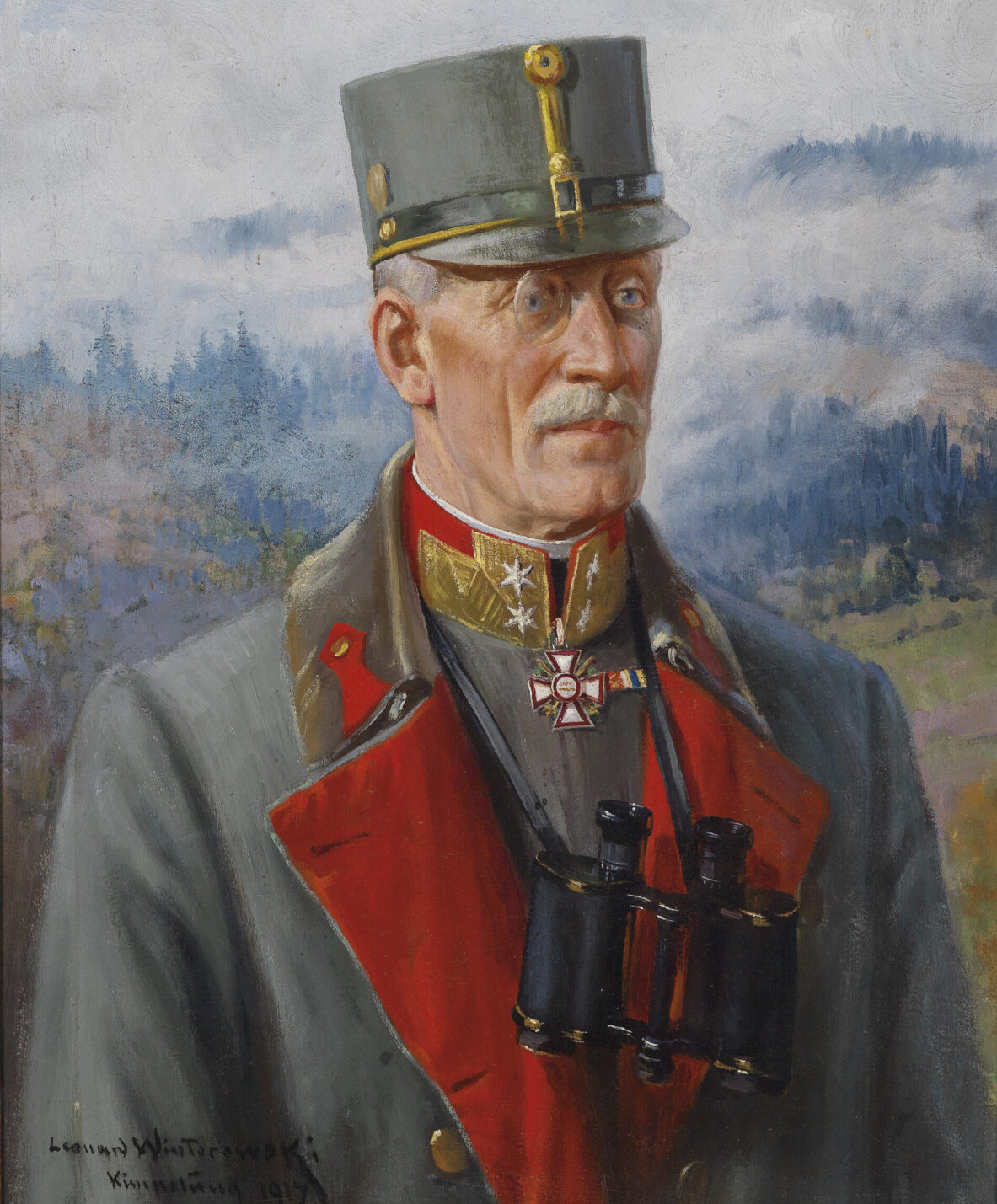
Johann Herbert was the last living former Graf of the House of Herberstein until his passing in 1940.
Following Austria-Hungary's defeat in the war, Austria passed a law on April 3, 1919, abolishing the monarchy and all noble titles, which has been in effect ever since.
But what about the castle? Clemens says that it's not all it's cracked up to be.
“I didn't grow up in the castle. A cousin does live there, but it's now home to a museum,” Herberstein said. “In America, it's looked at kind of like a ‘Cinderella' type thing, but living in an old castle isn't always as nice as it sounds.”
The lack of some modern amenities can shatter the fairytale image, it seems.
He stressed that while his heritage is a fact of his life he can't change, he doesn't let it define him.
“It's not the sole factor defining who I am,” Herberstein said. “I like to forge my own path in life.”
A long path to America
Nobility or not, Clemens' path to East Texas was not smoothly paved. After finishing secondary school, his first stop was boot camp. Herberstein joined the Austrian military, serving in the 6th Mountain Brigade of the nation's Land Forces.
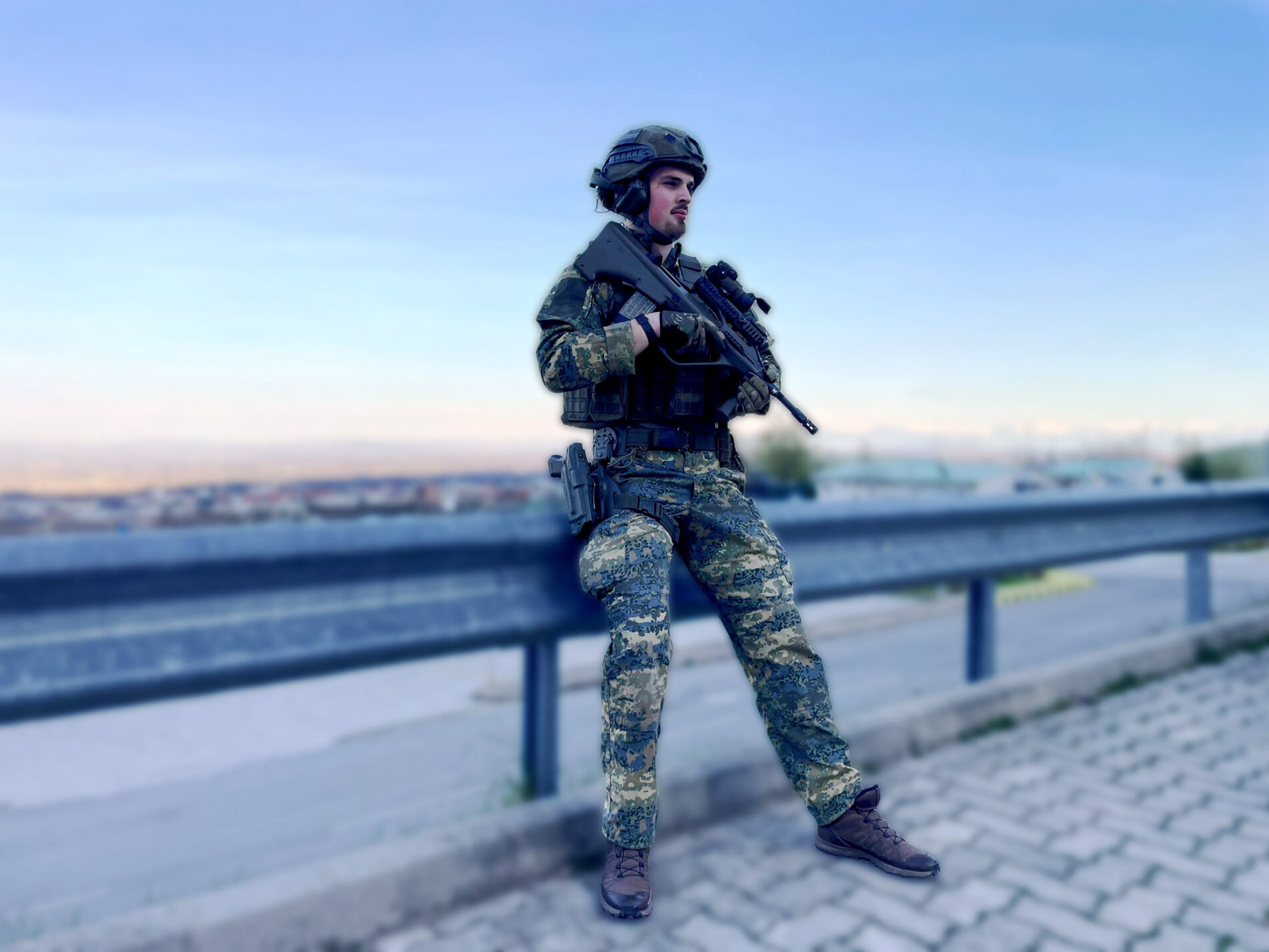
He underwent a rigorous 18-month selection process to join the unit and served for 4.5 years, which included multiple deployments, such as six months in Kosovo. By the time he left the military, Herberstein had reached the rank of Wachtmeister, or Team Sergeant.
Herberstein said he enjoyed his time in the military but found himself at a crossroads.
“I felt that either I take a shot at making a life for myself in America, or I spend my whole career in the military,” he said. “If I had stayed, it would be hard to have a family or have many friends outside of the service since I would be away for so much of the time. It's a very different way to live.”
He added that to truly succeed and be fulfilled by a military career, one needs to devote oneself completely to it.
“If you don't devote your life to it, you're in the wrong spot and you're not going to make it,” Herberstein said. “So, I gave my 100% while I was in, and once my service was up, I shifted my focus elsewhere.”
So, why Commerce?
A pressing question is how an Austrian soldier finds his way to East Texas in the first place. But Clemens was more familiar with the region than one might think.
“My grandmother actually owns land in Roxton, Texas,” Herberstein said. “So, I had spent some time in East Texas before.”
He also had the lowdown on what campus life was like. Lion alum and fellow European Remy Schenk is a close friend of Herberstein, who graduated in 2018 with a degree in Agribusiness. Schenk spoke with him at length about his education in Commerce, and Herberstein even visited the campus as a teenager.
“One of the first things that struck me is how accessible the campus is for any issue you have,” Herberstein said. “Whatever you need help with, there's someone here to assist you. You feel like there are no roadblocks to success.”
He added that he feels the same way about the nation as a whole.
“The main difference between America and Europe, in my opinion, is if you really want something, no one is closing any doors on you,” Herberstein said. “If you're crazy enough to try something, try it, and people will be there to help you.”
8 seconds of glory
That something Herberstein was “crazy” enough to try? Competing as a rodeo cowboy.
He was introduced to the sport through Lion Rodeo Team Head Coach Dameon White, who taught one of the first classes Clemens attended on campus. White actually approached Herberstein to gauge his interest in joining the rodeo team.
“Clemens is a great young man, and he's like a sponge; He wants to learn everything about his event,” White said. “Clemens has come a long way in his event, and he will go a long way in rodeo.”
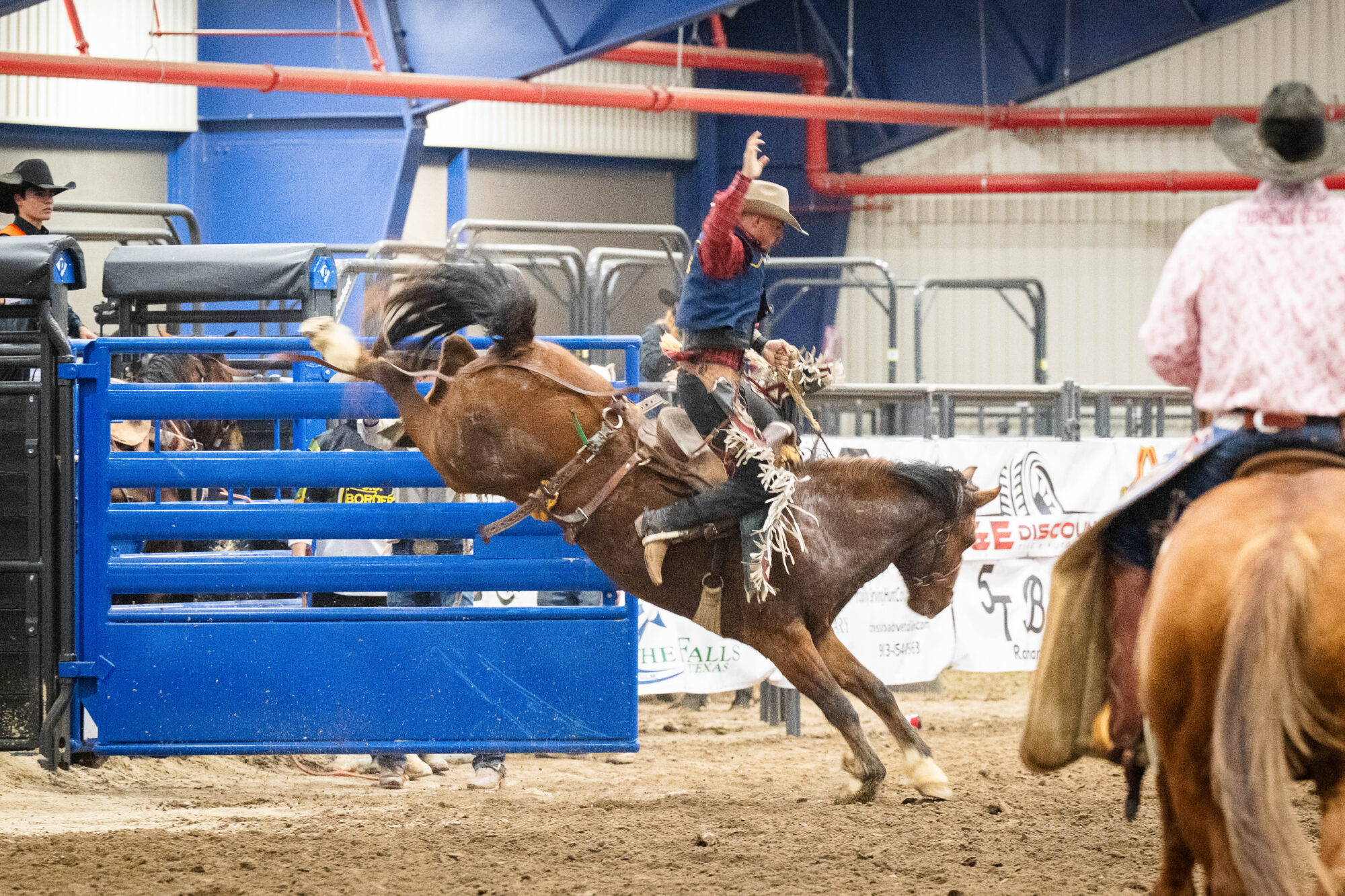
The sport intrigued Clemens, so he decided to give it a try. Since he had never even sat atop a horse in his life, learning the ropes of saddle bronc riding–one of the most dangerous and physically demanding competitions in rodeo–was no easy task.
During a saddle bronc event, riders need to stay on top of a wildly bucking horse for eight seconds while only holding onto the reins with one hand. Rooted in ranching history and the task of “buck breaking” among working cowboys, this event carries a fair amount of risk.
“It's been interesting, for sure,” Herberstein said. “These horses are bred and trained to be able to throw you off their backs.”
But the danger is what drew him to the sport.
“In saddle bronc riding, you have to put something on the line,” Herberstein said. “If there's not something you have to risk, to me, there isn't much to gain or achieve. I don't know if that's the right way to approach things, but it's how I've approached many things in my life.”
You could say that Clemens certainly fits the bill of Ein Adrenalinjunkie.
Putting his body on the line
Since joining the ET Rodeo team in January 2025, Herberstein has worked on getting the hang of the whole saddle bronc thing, which has been no easy task. After competing in several events, including the inaugural ETAMU Rodeo at the brand-new Spur Expo facility in late March, he had yet to make a final championship round in this event.
“It's really important to say that I am not good at my event whatsoever,” Herberstein said bluntly. “I do have some things going for me, because I never gave up. But even through everything, the support I got from coach and the team has been great. I always had doors open to train, get feedback and try to get better.”
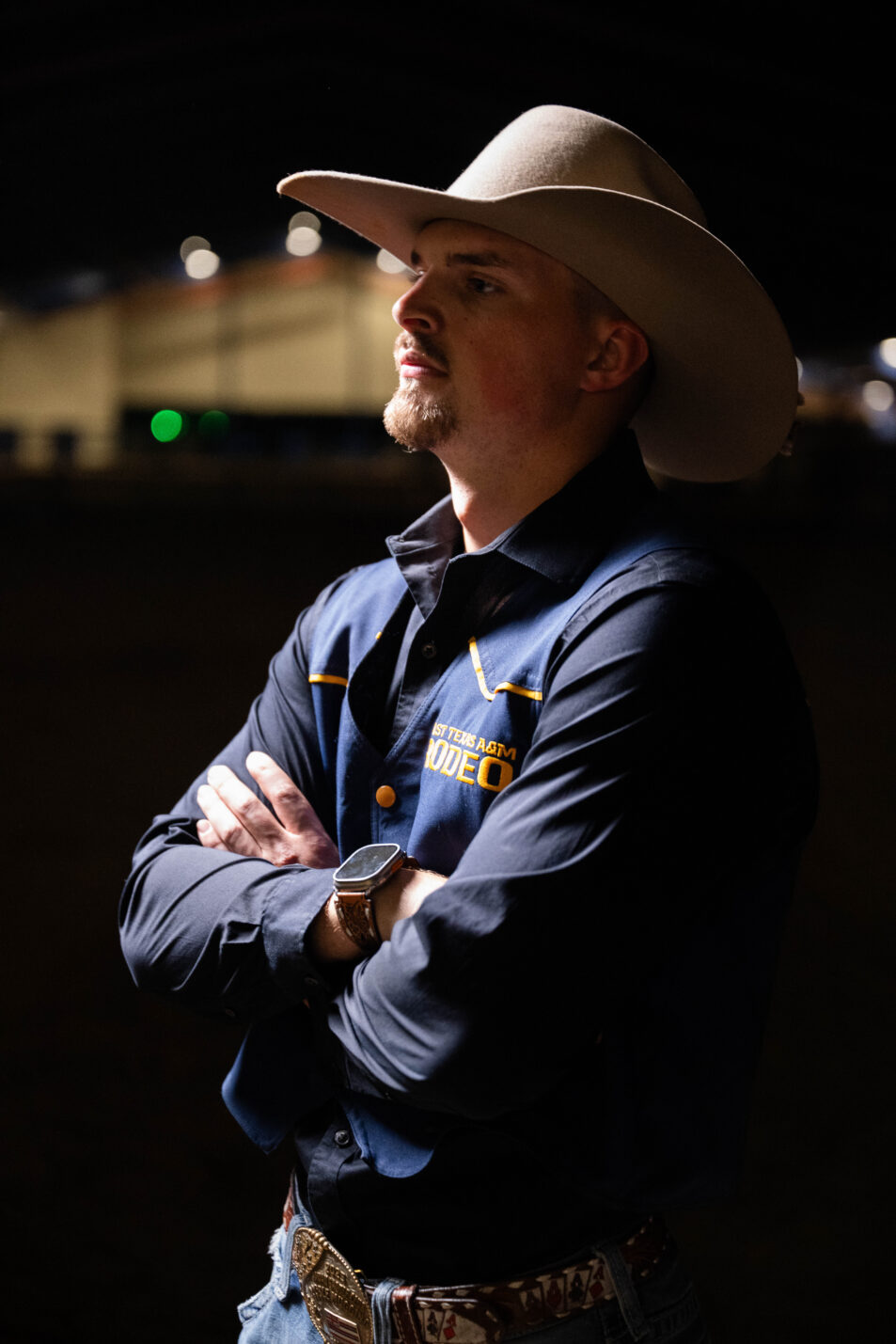
The time spent working on his craft was finally rewarded at the Trinity Valley Community College Rodeo on April 4, where he earned a spot in the final round of his event for the first time.
If he had a good ride, he could earn his first-ever college rodeo event victory.
The stakes were high. The lights were bright…
…He barely made it out of the gate.
Just before the chute opened, the horse jerked its head suddenly and violently, yanking Clemens' left arm holding the rein, tearing his bicep. It was a serious injury that left him no chance to finish his run. He quickly tumbled to the ground, his chance at victory gone.
What's more, the injury effectively ended Herberstein's college rodeo career. He is about to age out of his eligibility with the National Intercollegiate Rodeo Association, which only allows riders to compete within six years of their high school graduation, placing an age cap of 24 or younger for most students. Clemens is now 25.
With his left arm in a sling, he said he is having surgery soon. While his time as a rodeo cowboy is over, he isn't letting that dampen his outlook on his time in a blue and gold ETAMU vest.
“Play the game, take the pain. It's just kind of what you do,” Herberstein said. “It's a privilege to be part of the team. I am very impressed with the amount of work our team puts in.”
He added: “I honestly feel that joining the rodeo team and learning to ride and compete has been one of the best decisions I've made since coming here.”
So, what's next?
Now, it's all studies for Herberstein, who looks to complete his bachelor's degree in a year or so. After that, he says he'd like to stay in Commerce to study for a master's degree. Either way, he wants to remain in America and in Texas.
“I really just want to stay here forever if there's a way for me,” Herberstein said. “I love this place.”
Learn more about the East Texas A&M Rodeo team at etamu.edu/Rodeo.