



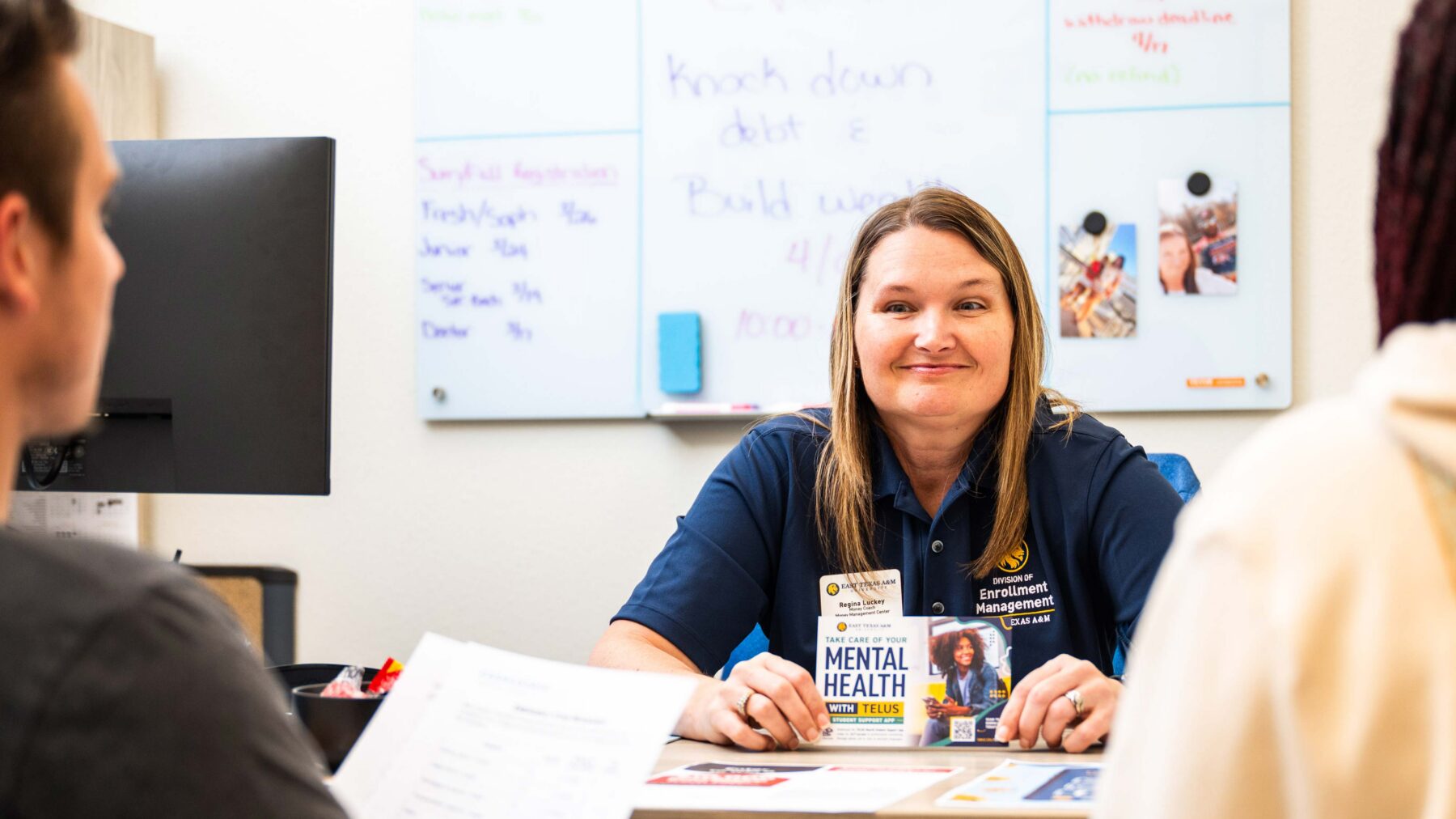
What is the Field of Human Services? Dr. Rusty Fox Explains
The Human Services degree combines practical helping skills with academic preparation for careers in counseling and other helping professions.
For people drawn to helping others, counseling offers a career centered around making a meaningful difference in the lives of individuals, families and communities. Counselors help people navigate challenges, develop healthier ways of coping and make decisions that can improve their well-being and quality of life.
But for those students newly entering college who already know they want to become counselors, the educational path to that career may not be clear.
At East Texas A&M University, the Bachelor of Arts and Bachelor of Science in Human Services offer an undergraduate starting point. Housed in the Department of Counseling, the program combines the study of human behavior and development with practical helping and interpersonal communication skills. It also prepares students for careers in human services or further study in counseling. East Texas A&M describes the degree as preparation for counseling-related careers and graduate school on the path toward becoming a licensed professional counselor (LPC).
Dr. Rusty Fox, assistant professor and Human Services program coordinator, explains what the Human Services major is, what students can do with the degree and why it is the most direct choice for students interested in becoming professional counselors.
For someone who has never heard of Human Services as a major, what is it?
Human Services is ETAMU's undergraduate degree in counseling. It is offered through East Texas A&M’s Department of Counseling and serves as the first step toward becoming a professional counselor or licensed professional counselor.
We take a practical, hands-on approach to working with people who are coping with the challenges of everyday life. Human Services students learn to facilitate rather than simply “fix,” translating theory into meaningful practice while developing the skills to help others.
What kinds of careers can graduates pursue with a bachelor’s degree in Human Services?
The B.A. or B.S. in Human Services provides a strong foundation for graduate study in counseling, but it can also prepare students now for a wide range of careers at the bachelor’s level.
Those opportunities include behavioral support, community and social services, health care and advocacy, government services, nonprofit and community outreach, and college and university student affairs. In reality, it provides advanced training for work with clients, patients and customers in almost all walks of life.
Depending on the position and its requirements, graduates may pursue work in areas such as substance abuse services, crisis intervention, case management, probation and corrections, child welfare, victim or patient advocacy, disability services, human resources, training and development, nonprofit programming and student services.
Why is Human Services a strong undergraduate choice for students who ultimately want to become professional counselors?
It is the major designed for and taught by counselors.
Students will notice that all of the Human Services courses carry the Counseling prefix: COUN. That's because the courses are specifically geared toward the counseling profession. Students develop practical skills they will need in the helping professions before they enter graduate-level clinical training. Through coursework and practical internship experiences, they are exposed to vulnerable populations, emotional regulation, rapport building, professional boundaries, ethics, multicultural competency, and the day-to-day operations of public and human service agencies.
Students also begin developing a professional identity and learning how to understand client concerns within a broader context. That early preparation can help provide a smoother transition into the serious work of graduate study in counseling and related fields.
What will students actually learn and do in the Human Services program at East Texas A&M?
In this program, students put theory into practice.
They develop skills in active listening, collaboration, reflecting content and feelings, asking open-ended questions, and appropriately using empathy to facilitate healthy and helpful communication.
These are foundational skills across counseling, healthcare, business and other helping professions. Students learn ways to support people as they identify barriers, explore challenges and develop decision-making skills that can help them find practical ways to cope with life’s difficulties.
How much hands-on or practical experience do Human Services students receive?
Through a hybrid program of both in-person and online courses, the majority of undergraduate counseling courses are experiential, hands-on classes. The faculty model concepts through practical examples, interaction and role-play to build on classroom theory.
Human Services majors also complete a 150-hour supervised internship. Students receive direct weekly coaching and supervision from both their site supervisor and university instructor or program coordinator.
Students personalize their internship site and area of focus to align with their individual interests and career goals.
What makes East Texas A&M’s Human Services program different from related majors such as psychology or social work?
We work collaboratively within the helping professions field. That's why it can be confusing. There are several educational routes that lead someone toa counseling career. Human Services is distinct because it is the undergraduate degree offered by the Department of Counseling. And the focus is on the challenges of living that occur for average people.
While students learn about assessment, data application, community resources and collaborative community building–from other fields as well as ours–our primary focus is application of those within the professional relationship between client and counselor.
We help students develop the knowledge and practical skills they need to become skilled helping professionals. We aim to transition caring students into competent counselors.
What options do students have for completing the degree?
The core, foundational Human Services (COUN) courses are offered in person, while supporting coursework is available online in synchronous and asynchronous formats.
We continually seek feedback from students about preferred formats and locations and consider those preferences in our planning.
What would you tell a high school student who knows they want a career helping people but isn’t sure what they should major in?
Welcome—you are our kind of people!
Give us a call and come meet our faculty. We are practitioners of counseling. We will walk you through how to build on your current strengths, develop new skills and explore the many opportunities available in the helping professions through Human Services.
It can be your first step toward becoming a counselor.
For students who decide to pursue professional counseling after earning their bachelor’s degree, East Texas A&M’s Department of Counseling offers graduate education that can continue that journey.
The university’s 60-credit-hour M.S. in Counseling with a clinical mental health counseling emphasis is accredited by CACREP, the Council for Accreditation of Counseling and Related Educational Programs. The program combines online instruction with required face-to-face coursework and includes practicum and internship experiences designed to provide supervised, hands-on clinical training. The curriculum is designed to prepare graduates for the examinations, direct supervision and other requirements involved in pursuing LPC licensure in Texas.
The department also offers graduate degrees in school counseling, student affairs and doctoral study in counselor education and supervision, providing opportunities for students to continue their education beyond the bachelor’s degree and prepare for careers serving individuals, schools and communities.
For students who already know they want to make helping others their life’s work, Human Services provides a place to begin.