



Finance Society Workshop Helps Students Stand Out Through Skills-First Hiring and Storytelling
Students in the East Texas A&M University College of Business are gaining a clearer edge in today's job market by learning how to communicate what employers are increasingly prioritizing: real, demonstrable skills.
On Feb. 12, the College of Business hosted “Skills-First Hiring: How to Tell Your Story So Employers Listen,” a Finance Society professional development session designed to help students translate classroom learning, leadership roles and work experience into compelling career narratives that resonate with hiring managers.
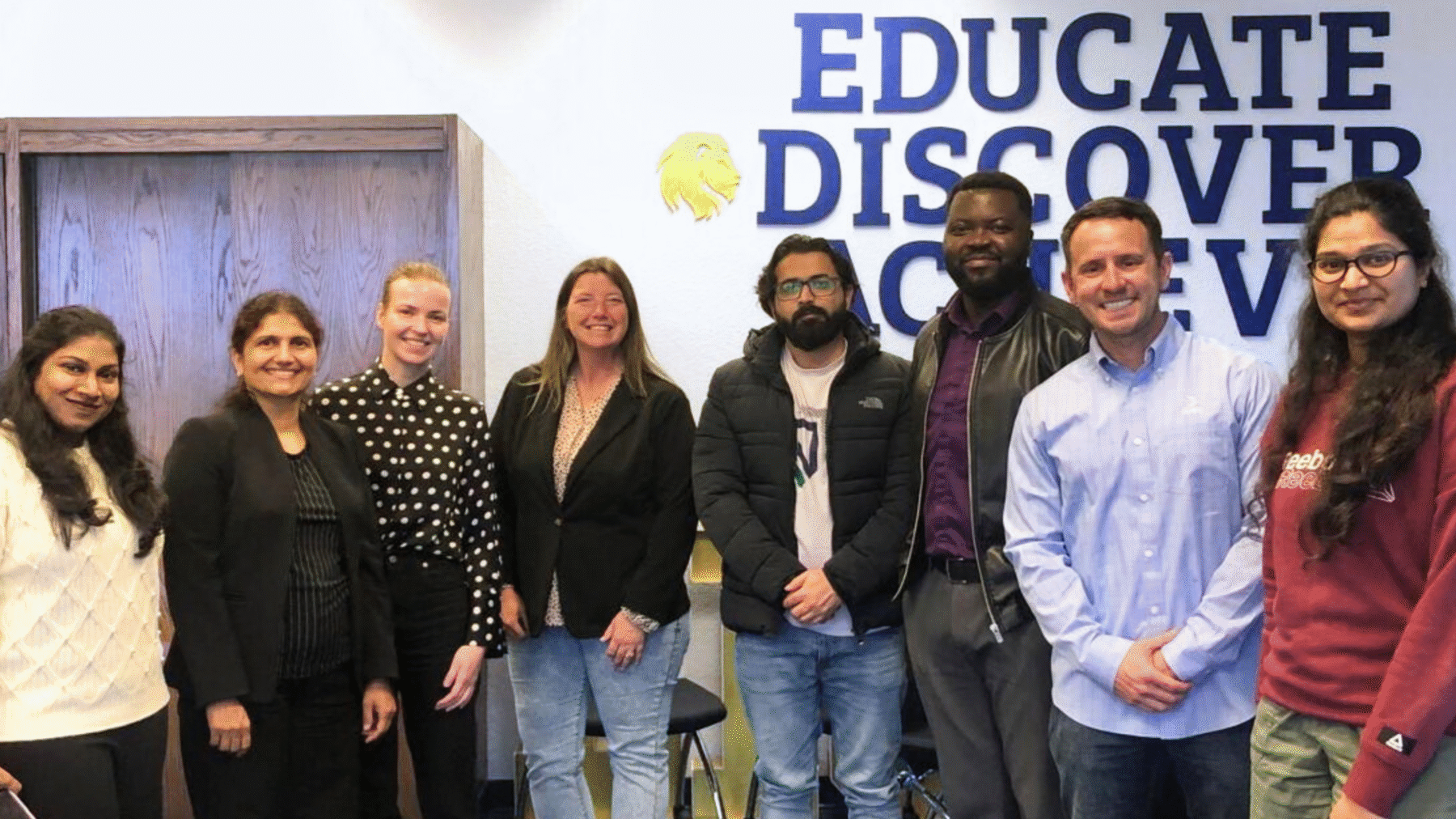
The event drew 40 students and featured two guest speakers from Hydro Aluminum Metals USA, LLC: Kyle Taylor, finance manager, and Tiffany Lux, HR manager. Together, they offered both the finance and hiring perspectives on how recruiting expectations are changing and what candidates can do to stand out—not by memorizing perfect answers, but by learning to tell their story with clarity, purpose, and professionalism.
Structured as an interactive, workshop-style talk with open discussion and Q&A, the session opened with an overview of skills-first hiring and how employers are shifting away from evaluating candidates solely by majors, job titles or a list of tasks completed. Instead, Taylor and Lux emphasized the importance of transferable competencies such as problem-solving, collaboration, and communication, reinforcing that hiring managers are looking for people they can trust and work with daily, not just candidates who appear technically qualified on paper. Throughout the hour, students stayed actively involved through reflection questions, real-time examples, and conversations that helped them apply ideas immediately.
A central takeaway was that interviews and resumes shouldn't read like task lists—they should communicate a clear narrative of growth, impact, and potential. The speakers walked through practical scenarios and prompted students to consider how they would frame experiences from class projects, internships and leadership roles as professional competencies. In one example, the group discussed how a student with knowledge of multiple languages could tell that story for an opportunity in data analytics, positioning language ability as a practical advantage in collaboration and communication.
The workshop also addressed common interview moments, including how to answer “Tell me about yourself.” Taylor and Lux encouraged students to guide the direction of the conversation, avoid drifting too far into personal detail, and highlight something meaningful that may not already be obvious from a CV or resume. Students also received resume guidance, including the recommendation to keep resumes to one page in most cases, while acknowledging that exceptional circumstances may justify going beyond one page.
“Skills-first hiring and storytelling are critical because technical knowledge alone is no longer enough,” said Dr. Pratima. “Our students need the confidence to articulate their value, and sessions like this bridge the gap between education and real-world opportunity.”
Anna Averina, an MBA student and vice president of the Finance Society, said the session offered a timely perspective on what employers are truly evaluating.
“This session was an engaging and insightful one that offered a refreshing perspective on today's hiring landscape. A key message that resonated with me is that recruiters are not distant gatekeepers, they are professionals looking for future colleagues they can trust, collaborate with, and grow alongside.” She continued, “The discussion was practical, honest, and highly interactive. It was a pleasure engaging with Kyle and Tiffany and gaining valuable insights from both the finance and HR perspectives.”
The session concluded with informal networking, giving students the chance to connect directly with the speakers and ask follow-up questions—an extension of the CoB's ongoing focus on strengthening relationships with industry partners and creating career pathways through mentorship, professional development, and employer engagement.