



ETAMU Nursing Simulation Lab Brings Patient Care to Life
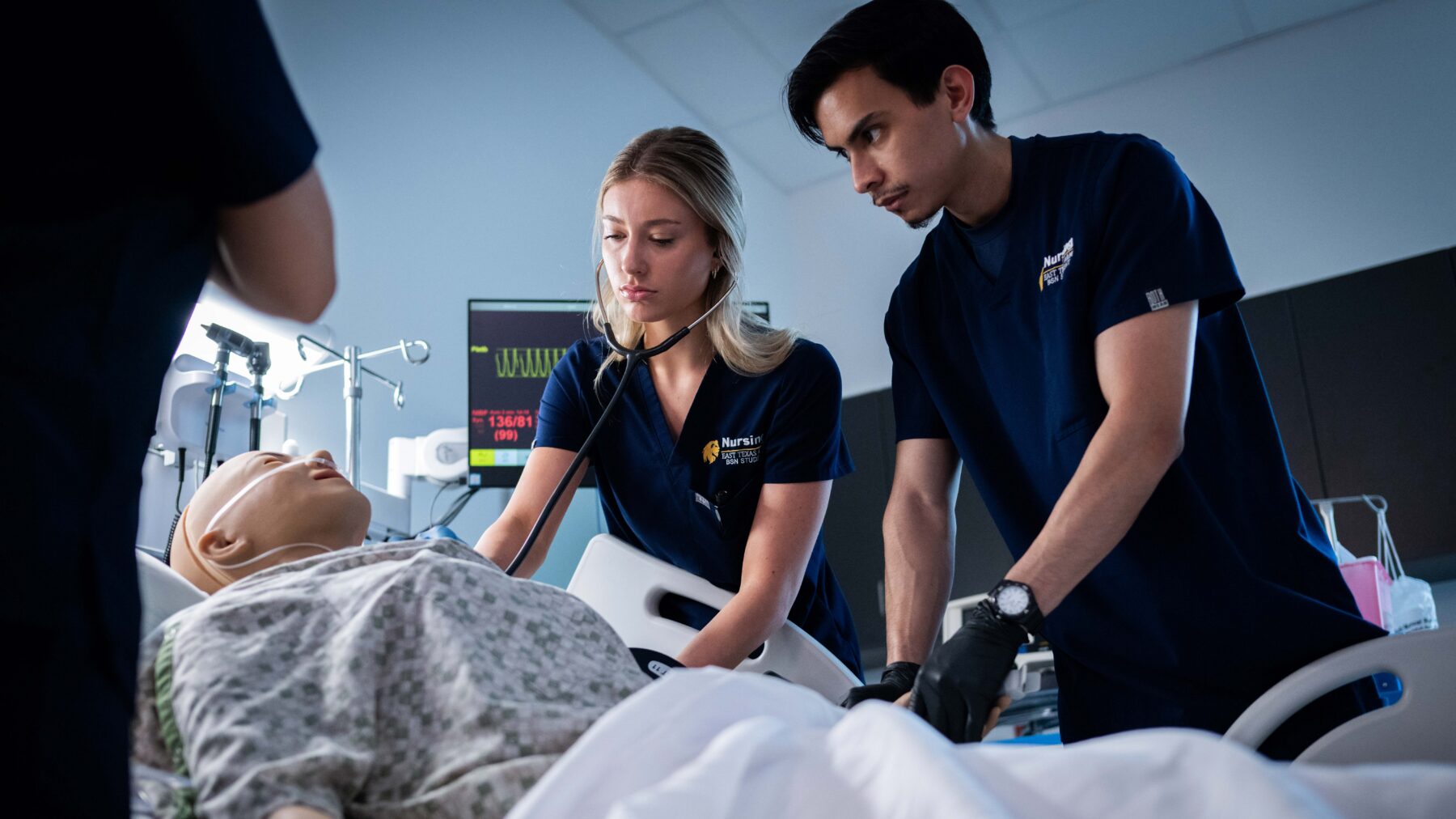
Four second-year nursing students enter what looks like an ordinary hospital room and immediately have a problem on their hands: Their patient's oxygen level is too low.
They introduce themselves, assess the patient and listen to her lungs before administering oxygen. As her condition demands more attention, the students provide a breathing treatment and intravenous medication.
But the patient isn't a patient at all.
She is a high-fidelity mannequin in East Texas A&M University's School of Nursing simulation lab, where students can encounter everything from asthma and heart failure to severe dehydration and psychological crises–without putting an actual patient at risk.
Next door, an instructor watches the students through a two-way mirror and listens through headphones. When they speak to their patient, the instructor answers through a speaker, giving the mannequin a voice and adding another layer of realism to the exercise.
The room completes the illusion. A hospital bed sits alongside a patient monitor, IV equipment, oxygen, a sharps container, boxes of gloves, a sink, a telephone and other equipment students can expect to encounter in a healthcare setting.
For ETAMU nursing students, it is just another day of the classroom coming to life in a series of realistic scenarios.
A Safe Place to Make Mistakes
The simulation hospital inside the Nursing and Health Sciences Building includes six rooms that can be adapted to create different healthcare environments and scenarios. High-fidelity mannequins can replicate physiological changes such as heart rhythms and lung sounds. Students can assess their patients, recognize changes in their conditions and determine what treatment is needed.
“When the students actually walk into a room, it is treated just like they were actually walking into a hospital room with a patient,” Simulation Lab Coordinator Kevin Green said. “The simulation lab is a place for the students to make mistakes. Because they are going to make mistakes, and it's much better to have them make mistakes here than in the hospital.”
The simulations cover numerous disease processes and situations, including heart failure, asthma, systemic shock, preeclampsia, severe dehydration, preoperative and postoperative care, and psychological crises.
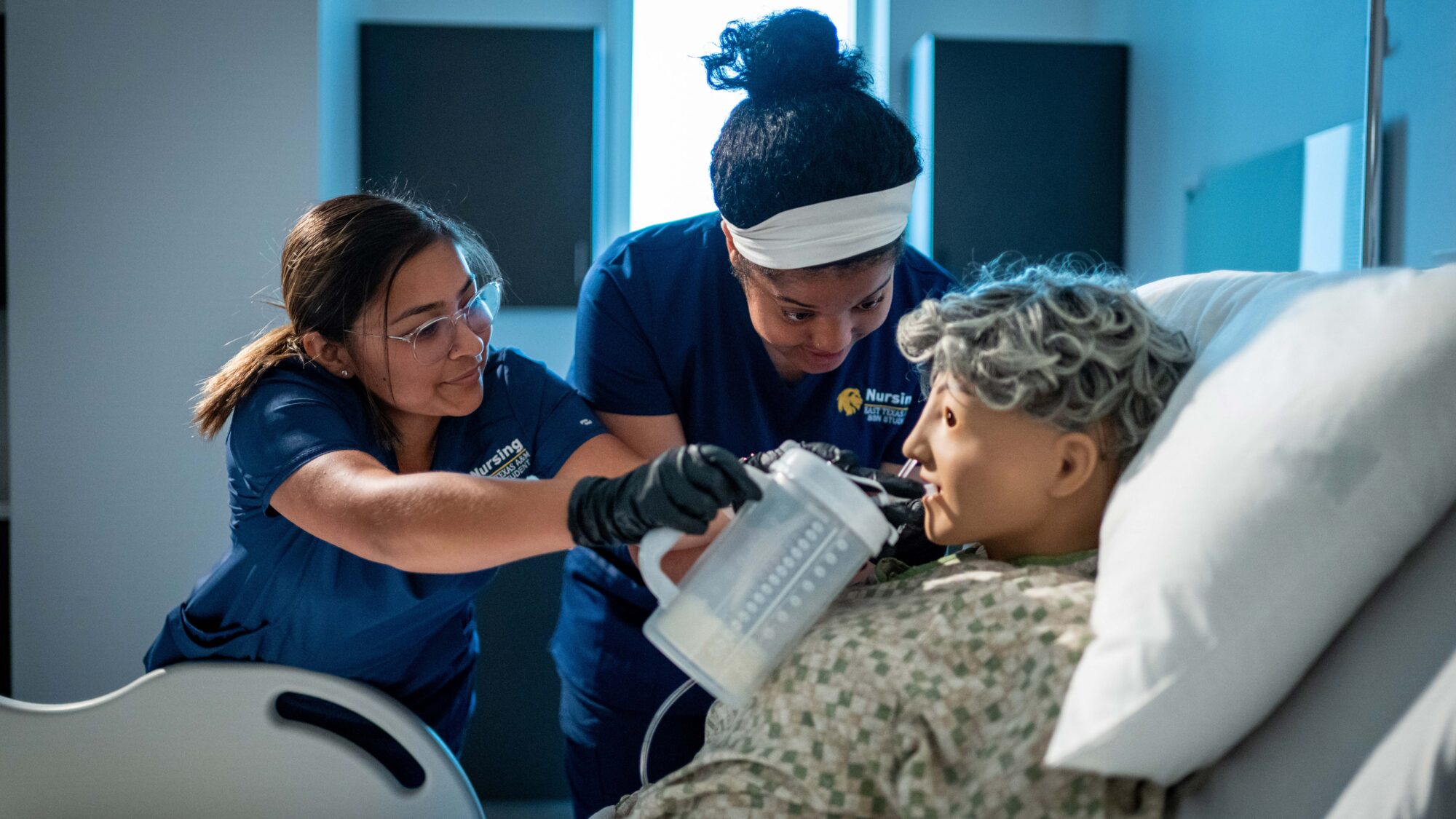
Some scenarios even move beyond the hospital. Green described transforming a simulation room into the home of an elderly home-health patient, complete with trash, fake roaches, a higher room temperature and even an unpleasant odor to make the environment more convincing.
Mental health simulations may use actors portraying patients, while students can also encounter family members played by fellow students.
Building Nurses Through Experience
Students begin using simulation during their first semester and rotate between simulation experiences and clinical work in actual health care settings.
For Dr. Jennifer Ashcraft, interim department head for nursing, the ability to practice in a controlled environment gives students experiences they may not encounter during traditional clinical rotations.
“We can take the most commonly seen types of patients, or the high-risk patients, simulate an experience just like you would in the hospital with that patient,” Ashcraft said. “But it's a completely safe learning environment.”
That environment can also be intense. A simulated patient's condition may deteriorate until students recognize the problem and intervene. Students must communicate critical information to teammates, prioritize care and make decisions under pressure.
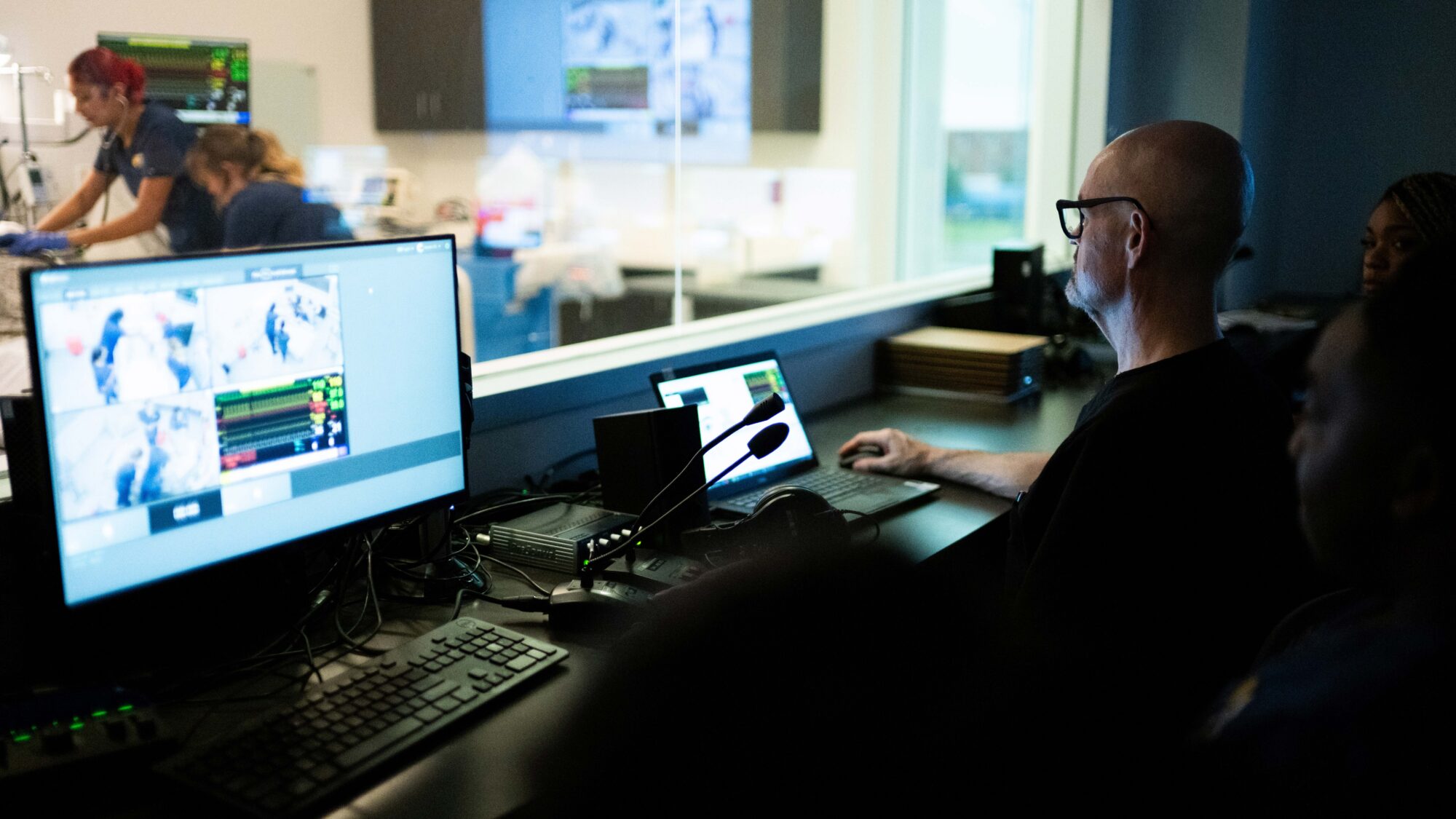
Afterward, faculty members debrief students about what happened, why they made particular decisions and what they might do differently. Simulations can also be recorded and reviewed.
“The very last thing I ask them is, what is one thing you've learned today that is going to shape the way you practice when you leave school?” Ashcraft said.
Preparing for the Real World
The simulation lab complements ETAMU's broader nursing programs, which include a pre-licensure Bachelor of Science in Nursing, an RN-to-BSN track and a Master of Science in Nursing Family Nurse Practitioner program. The university's BSN and MSN programs are approved by the Texas Board of Nursing and accredited by the Commission on Collegiate Nursing Education.
Technology in the simulation program continues to grow, too. Students are gaining access to electronic patient charts and workstations on wheels that allow them to practice documentation, while the program is also preparing virtual reality simulations. Those experiences will challenge students to manage multiple patients, prioritize competing needs and deal with the constant interruptions that nurses face in real hospitals.
For the four students treating the simulated asthma patient, however, the lesson ends much as a real nursing shift might: with a discussion of what went right, what could have gone better and what they will do next time.
Their patient will be just fine.
And when the next one is real, they'll be better prepared.