



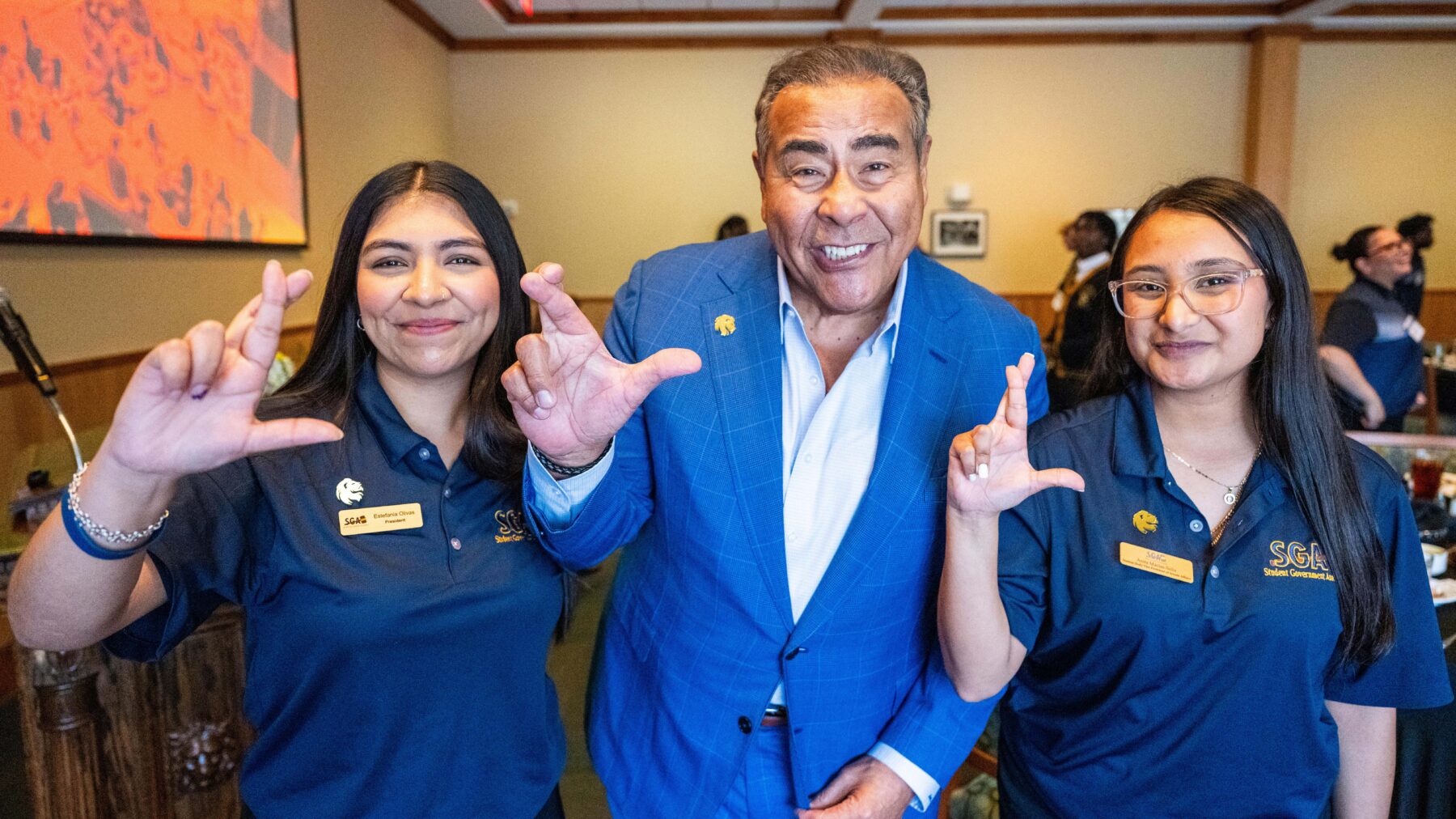
East Texas A&M Hosts Civil Discourse Symposium, Bringing Students and Leaders Together for Meaningful Dialogue
Texas legislators and national media figures visited East Texas A&M University today for the university’s first Civil Discourse Symposium. During the event, the VIPs and students engaged in meaningful conversations focused on communicating effectively and civilly in a divided world.
Guest speakers included former U.S. Congressman Mike Conaway, national news correspondent John Quiñones (ABC News), Alexander Heffner (PBS), and Phil Prazan (NBC 5). Panelists included Texas Senator Bryan Hughes and Texas Representatives Nicole Collier, Brent Money, Ramon Romero, Jr., and Gary VanDeaver. VanDeaver, Money, and Conaway are all East Texas A&M alumni.
The symposium was part of the “Civil Discourse in a Divided Age” initiative led by The Texas A&M University System. East Texas A&M was selected as one of three pilot campuses for the initiative, reinforcing its role in preparing students to lead with empathy, critical thinking and effective communication.
Expert Perspectives on Communication and Leadership
Texas A&M System Chancellor Glenn Hegar, Regent Sam Torn and University President Mark Rudin opened the symposium.
“We all need to learn how to listen a little bit better, learn how to engage with others, and discuss issues of critical importance,” Hegar said.
Hegar emphasized that colleges and universities need to lead by example in fostering civil engagement among human beings.
Former U.S. Congressman Mike Conaway delivered the morning keynote where he urged students to engage respectfully and remain committed to dialogue, even in the face of disagreement. Drawing on his experience in Congress, he highlighted how relationships, patience and a willingness to compromise are essential to advancing meaningful policy and solving complex issues.
“Think about how you personally are going to take responsibility for your own attitude, your own conversations that you have, the way that you speak to each other, the things you post on social media,” Conaway said.
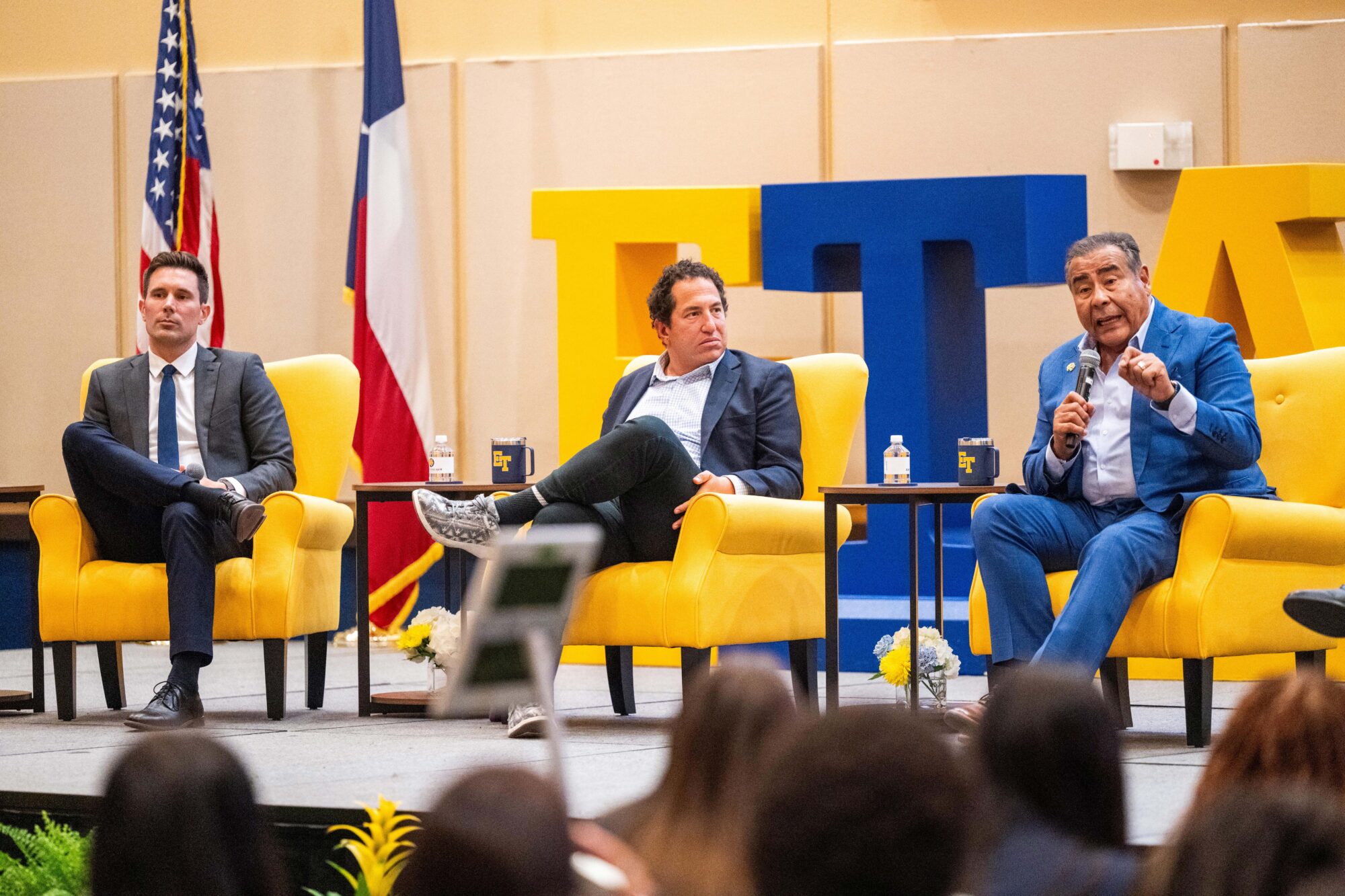
The keynote was followed by a bipartisan panel discussion featuring Conaway, Senator Bryan Hughes, and Texas Representatives Nicole Collier, Brent Money, Ramon Romero, and Gary VanDeaver. The panelists answered student-driven questions in a conversational format, focusing on issues students care about most. Discussion centered on why political conversations break down, and panelists emphasized respect and active listening as keys to productive dialogue. The speakers also encouraged students to stay engaged and practice thoughtful, informed participation in civic life.
“Don't forget: there's power in your voice, and that's how we have change—when you use your power respectfully in a way that promotes change,” Collier said.
Following the session, students engaged directly with panelists during informal discussions, as well as during a student engagement event held outside the student center.
The event continued with a book signing at the University Bookstore featuring Alexander Heffner, host of PBS's “The Open Mind,” and former Midland Mayor Patrick Payton, followed by a luncheon that encouraged further dialogue among speakers, students and guests.
Civil Dialogue in a Divided World
During the afternoon session, John Quiñones, award-winning ABC News journalist and host of “What Would You Do?”, shared powerful reflections on ethics, storytelling and civil discourse from his long career in journalism.
Quiñones highlighted how his show uses real-life scenarios to challenge individuals to confront injustice and consider their own moral responsibility. He defined the true measure of character as “…what we do, even when no one is watching,” and he urged attendees to move beyond bystanders and become active participants in doing what is right.
Through personal stories of overcoming adversity—from his upbringing as a migrant farm worker to becoming an award-winning journalist—Quiñones described his occupation as a “candle in the darkness.”
“The journalist…is the person with a little flashlight, or the little candle, and they can shine it on the darkest corners of the room to illuminate injustice, to illuminate corruption, to illuminate human rights violations, and civil rights violations,” he said.
A media panel followed, featuring Quiñones, Heffner and NBC 5's Phil Prazan. During the discussion, the panelists emphasized that consumers, including students, have power over the media.
“[The media], as a business and trying to deliver what you all want, will follow you,” Prazan said. “So, you have an incredible amount of power over the media if you decide to use it.”
The symposium concluded with continued student engagement opportunities and a taping of Heffner's “The Open Mind” in Ferguson Auditorium, offering a select group of students a behind-the-scenes look at public affairs programming.
Building Skills for a Lifetime of Leadership
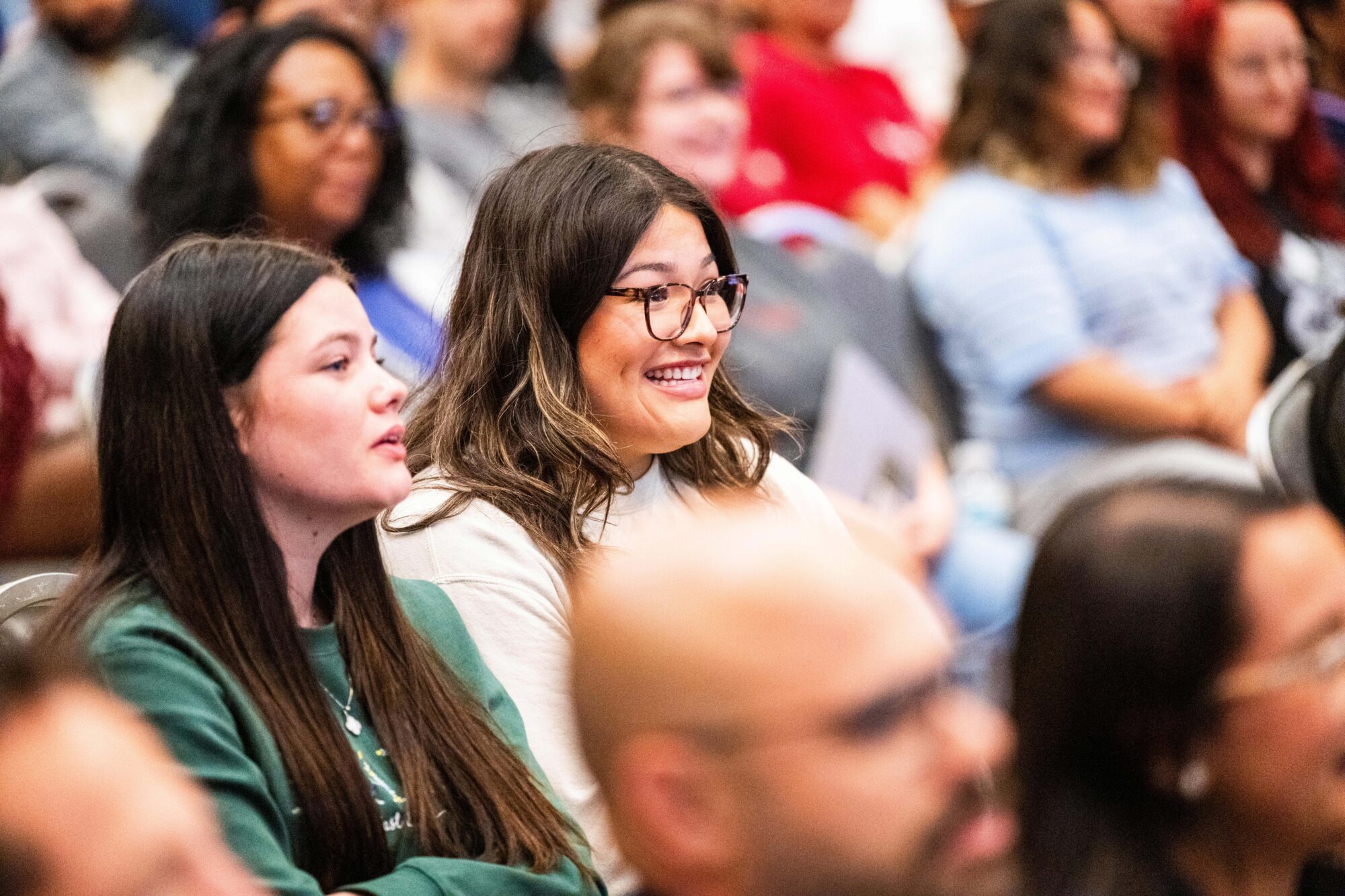
Students who attended the symposium were enthusiastic about the event, stating that they gained valuable insight into effective communication.
“One thing I learned today is that we need to hear each other more, instead of trying to listen to respond or argue,” said Ayden Bell, a junior pre-nursing major. “And we just need to make sure that we hear everyone's side and understand that everyone's human.”
Madi Kitch, a junior communications studies major, added: “When we recognize that people are trying to come at the same issue from different perspectives…when we're able to have civil discussions about that, it'll lead to more change. I think a lot of the time, the answer lies somewhere in the middle, so being able to hear both sides is important.”
By bringing together diverse voices and perspectives, the Civil Discourse Symposium created a space for students to practice and explore meaningful dialogue—an essential skill for leadership in today's complex world.
View the photo gallery from the Civil Discourse Symposium.