


We are excited to announce the list of plenary speakers for AMPRA 7.
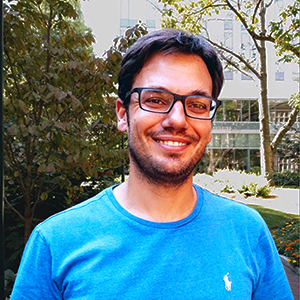
Andrea Beltrama, Ph.D.
From Mansplaining to Gaslighting: The Discourse Anatomy of Conversational Abuse
Typified examples of uncooperative, abusive conversational behavior are increasingly prominent in public discourse. These include, for example, mansplaining— i.e., a man providing unnecessary and unwelcome explanations to a woman—or gaslighting—i.e., a speaker causing the listener to systematically doubt their feelings and judgments, and ultimately their own perception of reality. The pervasiveness of these phenomena raises an intriguing question for pragmatics: what particular conversational choices and epistemic assumptions on the part of a speaker make these patterns of behavior distinctive, and ultimately socially recognizable?
In this talk, I propose that both mansplaining and gaslighting can be understood as distinct instantiations of Common Ground mismanagement—a phenomenon observed when at least one interlocutor hinders the process of knowledge accrual and communal inquiry that typically underlies felicitous conversations. In the case of mansplaining, I suggest that Common Ground mismanagement results from one interlocutor systematically aiming to add redundant, uninformative propositions to the Common Ground. In the case of gaslighting, I suggest that mismanagement results from one interlocutor acting so as to ensure that the Common Ground always contains inconsistent propositions, thus making knowledge accrual a logically impossible task.
Looking at the broader picture, I argue that there is much to gain from analyzing these cases by applying the same analytical tools that we normally utilize to model cooperative discourse structure and development—even for instances of conversational behavior that clearly deviate from the ideal of a cooperative exchange.
Biography
Beltrama is an Assistant Professor in the Department of Linguistics and Cognitive Science at the University of Delaware, after working as a postdoc at the University of Pennsylvania, the University of Paris and the University of Konstanz. He obtained his Ph.D. from the University of Chicago in 2016, with a thesis on the semantic and sociolinguistic dynamics of intensification in English and Italian. His research interests revolve around the study of meaning broadly construed, with an emphasis on how pragmatic reasoning informs and is informed by other activities central to human communication—such as building common ground, forging social relations and expressing agreement or disagreement.

Matthew T. Prior, Ph.D.
Making Grief Tellable: Formulation and the Discursive Labor of Loss
Grief is sometimes described as the “great equalizer,” a universal human experience that is nevertheless intensely individual. For discourse analysts, it is also a communicative phenomenon, something people talk and write about, increasingly in online spaces. Communicating grief, however, is a fraught undertaking. Grievers may struggle to find adequate words, while recipients may be uncertain about how best to respond. Such moments raise questions about how accounts of personal loss are assembled and how their meanings are negotiated in discourse.
In this talk, I explore the discursive labor involved in making grief tellable and accountable. Drawing on research on narrative and tellability (e.g., De Fina & Georgakopoulou, 2012; Sacks, 1992) and the interactional study of emotion (Peräkylä & Sorjonen, 2012; Prior, 2015, 2019), I focus on practices of formulation and reformulation (Bilmes, 2011; Prior & Hauser, 2019). My discussion centers on grief talk from CNN's All There Is podcast, as well as posts from online grief-support communities and social media.
My analysis shows how formulations of grief become occasions for further interpretation and reformulation, with consequences for how loss and grievers are understood. In responding to such descriptions, recipients may affirm a person's account or introduce understandings that the person does not necessarily share or accept. In mediated and digital spaces, grief talk may also reach ambient audiences whose responses cannot necessarily be anticipated or even known. I argue that making grief tellable involves more than articulating loss, as the ways people formulate their experiences also shape how those experiences become available for recognition and evaluation. I conclude by considering what these findings suggest about the communicative demands of grief talk and our responsibilities as listeners and analysts of such discourse.
Biography
Matthew T. Prior is Professor of English at Arizona State University, where he teaches in the Linguistics and Applied Linguistics/TESOL programs and serves as Associate Department Chair. His research examines the relationships between language and human experience, with particular attention to emotion, identity, memory and multilingualism. His work draws on discourse-analytic and narrative approaches to investigate how people use language to negotiate meaning in interaction.
He is the author of Emotion and Discourse in L2 Narrative Research and co-editor of Emotion in Multilingual Interaction and The Routledge Handbook of Second Language Acquisition and Discourse. His research has appeared in journals including Applied Linguistics, TESOL Quarterly, The Modern Language Journal, Journal of Pragmatics, Research Methods in Applied Linguistics, and Qualitative Inquiry. His current research examines grief discourse, with a focus on how people make sense of loss and negotiate its meanings in public and mediated contexts.

Naoko Taguchi, Ph.D.
From SLA Pragmatics to Intercultural Pragmatics: Research, Theory, and Application
With the ever-growing multilingual landscape and global interconnectedness, pragmatics in second language acquisition (SLA) has seen a reappraisal of the concept of pragmatic competence from the intercultural perspective (McConachy & Liddicoat, 2022; Taguchi, 2022). In this presentation, I will describe this trend by highlighting how the intercultural pragmatics framework (Kecskes, 2014) can advance the traditional practice of SLA-pragmatics research. Unlike the traditional framework that conceptualizes L2 learners' pragmatic knowledge as fixed and predetermined existing in comparison to native speakers' baseline knowledge, the intercultural framework situates pragmatic knowledge as emergent and co-constructed among all speakers (both native and nonnative) as they negotiate their interaction norms for mutual benefits. I will discuss this construct of intercultural-pragmatic competence and its applications to SLA research.
Biography
Naoko Taguchi is Professor in the English Department at Northern Arizona University, where she teaches courses in applied linguistics and TESOL. Her primary research interests include second language pragmatics, intercultural competence, technology- mediated language learning and English-medium education. Her recent books include the Encyclopedia of Applied Linguistics Pragmatics Volume (2026; with Daniel Kadar), Generative AI for Pragmatics: Research, Teaching, and Assessment (in press), and the Routledge Handbook of SLA and Pragmatics (2nd ed; in preparation). She is currently the co-editor of Language Learning (Wiley) and Applied Pragmatics (John Benjamins).