

Mathematics Education
Mathematics education is the field focused on how mathematical ideas are taught, learned, and understood, encompassing curriculum design, instructional strategies, assessment methods, and student cognition. It examines how learners develop mathematical thinking and problem-solving skills, as well as how teachers can effectively communicate abstract concepts across different age groups and backgrounds. Mathematics education plays a crucial role in preparing individuals for everyday decision-making, scientific reasoning, and careers in STEM fields, while also fostering logical reasoning and critical thinking skills.
Featured Publications
Texas A&M University-Commerce has implemented supplemental instruction (SI) for Calculus since the fall of 2013. A direct display of the ABC rates from fall 2005 to spring 2021 only presents fluctuation from semester to semester, and one can hardly deduce that the ABC rates are increasing. In this paper, the “moving average” technique is used to reveal the effectiveness of SI in improving the percentage of students earning a grade of A, B, or C (ABC rates) in Calculus. Our longitudinal data under the “moving average” also shows that the SI implementation increased the ABC rates of major ethnic groups.
Implementing an equity agenda in the classroom is both necessary and challenging for classes containing pre-service teachers. For this intervention, we chose to begin our History of Mathematics course for pre-service middle school teachers with a cultural simulation training
exercise: Bafa Bafa. After participating in the exercise, pre-service teachers were asked to write a reflection paper and were later interviewed about their experiences in the course. Although participants found Bafa Bafa an uncomfortable experience, it was not an unsafe one, and the pre-service teachers agreed that this exercise helped them better understand, articulate, and notice experiences with microaggressions.
A common reason for secondary teachers leaving is challenges with including students with
disabilities into general education classrooms (Talmor et al., 2005). Pre-service general education teachers may not receive any instruction about how to effectively adapt their math instruction for students with disabilities (Dibbs et al., 2020). In addition, pre-service special and general education teachers may not be provided with opportunities to practice collaborating on designing lesson plans on math topics for students with disabilities (Trent et al., 2003). This lack of practice can lead to students with disabilities not receiving effective mathematical instruction, potentially leading to lower participation in school, community, and employment (Othman, 2020)
While there has been extensive research on introductory and proof-based undergraduate courses, complex analysis has been relatively understudied. Most of the research on complex variables has focused on specific interventions to teach particular concepts in complex arithmetic and derivatives or mathematicians' reasoning about complex variables. The purpose of this case study was to investigate how students in a complex analysis course interpret multiplication and its relationship to the complex derivative and the amplitwist concept using Tall's three worlds of mathematics. Overall, participants were able to describe multiplication from a proceptual and embodied perspective, but struggled to conceptualize the complex derivative from an embodied perspective
Calculus is one of the greatest intellectual achievements of the world and is the main gateway for students that are heading into the fields that will power the economy of the 21st century. However, over 25% of students fail U.S. calculus courses each year and end up changing majors. It is important for educators and researchers to try to improve student success and find ways to increase STEM major retention. The purpose of this study was to compare the performance between students that are in traditional and non-traditional calculus II courses based on their preparation in either traditional or non-traditional calculus I. By the end of the study, non-traditional calculus II students performed approximately the same on every test and overall in the class. On the other hand, traditional calculus II students that took traditional calculus I performed better on the three tests, but their overall performance in the course was approximately the same as the students that took non-traditional calculus I.
Pre-service general educators may not receive sufficient training to support learners with diverse needs, while special educators may not be given opportunities to practice collaborating with general educators. Both sets of teachers could also benefit from training in supporting students with significant disabilities in mathematical instruction. To meet this need, a pilot study was conducted with general educators participating in a mathematical methods course and special educators participating in a course focused on students with significant disabilities. The general educators wrote two lesson plans for secondary math topics. The special educators adapted and returned those plans to the general educators. Both sets of pre-service educators reflected on their experiences, with the general educators reporting they felt more comfortable with asking special education colleagues for help in adapting lessons and the special educators reporting that they felt more able to teach and adapt math content for students with significant disabilities.
News

ETAMU Researcher Helps Protect Bitcoin Lightning Network From Quantum Threats
A groundbreaking new approach could help secure fast, off-chain Bitcoin transactions against the cybersecurity threats of tomorrow.

ETAMU Alumnus Co-Authors Book on Modern Software Delivery Systems
Sundeep Bobba is helping reshape conversations around modern software delivery through a newly published book that draws on years of industry experience and innovative systems thinking.
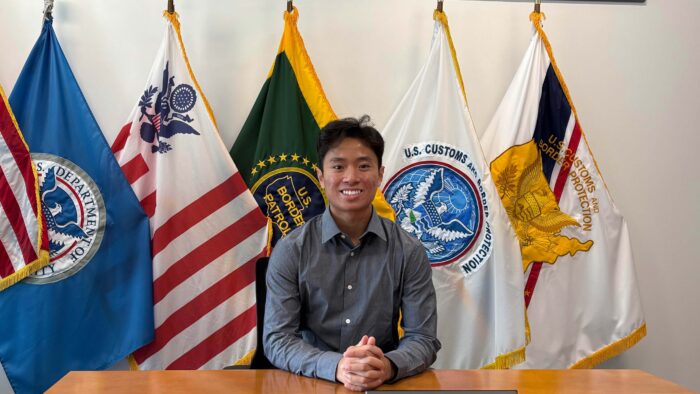
ETAMU Cybersecurity Graduate Lands Competitive Homeland Security Internship
A recent graduate put his cybersecurity education to work this summer through a highly competitive internship with the U.S. Department of Homeland Security.